Conference Info
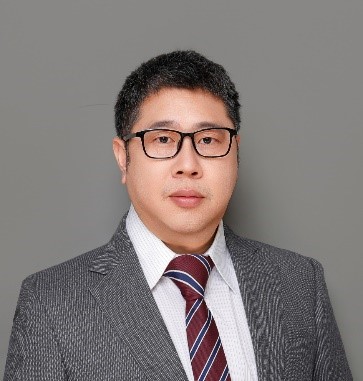
Tao Chao, Doctor of Science, Professor at the School of Physics, Nanjing University. He was awarded the New Century Excellent Talents in University by the Ministry of Education in 2009 and supported by the National Science Fund for Excellent Young Scholars in 2014. He also serves as a director of the Acoustical Society of China. He graduated from the Department of Electronic Science and Engineering, Nanjing University with a Bachelor of Science degree in 2000, and obtained his Doctor of Science degree in May 2004. From 2005 to 2009, he engaged in interdisciplinary research covering medicine and acoustics at the School of Medicine, University of Wisconsin. Since returning to China in 2009, he has presided over 7 national-level research projects including major scientific research instrument special projects and youth sub-projects of national key R&D programs, as well as 3 provincial and ministerial-level projects. His research interests mainly focus on photoacoustic imaging and its biomedical applications, vocalization mechanism and novel evaluation methods for voice quality. He has published more than 100 papers in international academic journals.
Defect Detection Technique Based on Flexible Omnidirectional Interdigital Ultrasonic Sensing
Rao Jing
Ultrasonic interdigital transducers (IDTs) show great promise for non-destructive testing due to their tunable operating frequency and beam-focusing capability. However, conventional ultrasonic IDTs often suffer from limited scanning angles and low spatial coverage efficiency, which restrict their application in real-time, high-precision defect detection. To address these issues, this paper proposes a flexible omnidirectional interdigital ultrasonic transducer (ODIDT) composed of fan-shaped interdigital structures. This design not only enables directional excitation of ultrasonic waves but also excites a single A0 mode guided wave at a center frequency of 380 kHz. Furthermore, a travel-time localization method based on spatial constraints is proposed. By exploiting the directionality of ODIDT transmission and reception, this method effectively suppresses imaging artifacts caused by limited sector sampling and insufficient path information. Experimental results demonstrate that the proposed ODIDT can accurately locate circular hole defects at different positions on a 2‑mm-thick aluminum plate and can identify defects with dimensions approaching the diffraction limit.
Biography of Rao Jing

Jing Rao is a professor at Beihang University, a national young talent, and an Alexander von Humboldt Fellow. She received her Ph.D. from Nanyang Technological University, Singapore, and previously worked as an assistant professor at the University of New South Wales, Australia. Her research focuses on non-destructive testing and structural health monitoring. She has led more than 30 research projects funded by the National Natural Science Foundation of China, the Beijing Natural Science Foundation, the National Science and Technology Major Project on Key New Materials R&D and Applications (2030), the Alexander von Humboldt Foundation, the University of New South Wales, and Sinopec, among others. She received the Best Project Award at the Singapore Maritime Technology Congress in 2017, the First Prize in Technological Invention (ranked first) from the China Petroleum and Chemical Automation Application Association in 2025, and the Award at the Far East NDT New Technology Forum in 2025. She currently serves as Associate Editor for Measurement, Ultrasonic Imaging, and the IEEE Open Journal of Signal Processing. She is a member of the Third Committee of the Equipment Structural Health Monitoring and Early Warning Division of the China Instrument and Control Society, a member of the NDT Division of the Chinese Mechanical Engineering Society, a senior member of IEEE and the Chinese Society of Theoretical and Applied Mechanics, and a session chair/TPC member for international conferences such as 2023 IEEE IUS, 2023 IEEE/ASME AIM, and 2021 ACAM.
From Research to Product: Development and Industrialization of Non-contact Air-coupled Ultrasonic Testing Equipment
Chang Junjie
Air-coupled ultrasonic testing is a non-contact non-destructive testing technology that uses air as the coupling medium. It breaks through the limitation of traditional ultrasonic testing that requires coupling agents, avoiding contamination caused by residual coupling agents or damage resulting from contact. It is suitable for detecting special scenarios and sensitive materials. This report first introduces the basic theory of non-contact air-coupled ultrasonic wave testing technology and the key technologies, detection principles and methods needed to achieve air-coupled ultrasonic testing, mainly including body waves and guided waves, same-side detection method, and opposite-side detection method. It also introduces the attempts of air-coupled ultrasonic in acoustic-optic, photoacoustic detection methods and imaging. Finally, it presents the application cases of the development equipment of various detection methods in actual engineering.
Biography of Chang Junjie
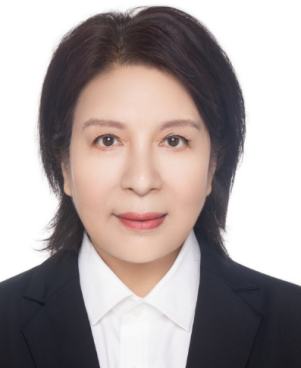
Individual Resume
(1) Former technical director of Japan Probe Co., Ltd.
(2)Former professor of the Ministry of Education Key Laboratory of Non-destructive Testing Technology at Nanchang University of Aeronautics.
(3) A national talent - recipient of the National Major Talent Program.
(4) Currently, a special-appointed expert at CSEI (China Special Equipment Inspection Institute).
Prof. Chang Junjie has been engaged in research on solid mechanics, material ultrasonic non-destructive testing and evaluation for many years. The main research directions include the interaction between ultrasonic waves and materials in complex media and structures, sound field design, sound wave propagation, and photoacoustic imaging methods. Mainly focuses on theoretical and practical application research on the excitation, propagation, scattering, focusing, and imaging of sound waves in high attenuation materials, anisotropic materials, and heterogeneous materials. Oriented towards the actual needs of industrial inspection and medical diagnosis, develops and researches practical application technologies and detection and diagnosis equipment. Has published over 100 academic papers and applied for more than ten national invention patents. Organized 13 international academic conferences "China-Japan Advanced Ultrasonic Non-Destructive Testing Technology Symposium". The "Non-contact Air Coupled Ultrasonic Inspection Device NAUT21" developed and researched during the period in Japan won the Technical Development Award of the Japanese Acoustics Society. Main research results:
(1) Development and application research of air-coupled ultrasonic testing systems;
(2) Development and application of special ultrasonic sensors in specific environments;
(3) Research and application of ultrasonic detection imaging technology and imaging methods.
Array Ultrasonic High Resolution Composite Imaging Technology for
Reinforced Concrete Structure
Li Qiufeng
Concrete structures are widely used in modern architecture due to their durability, load-bearing capacity, and other advantages. However, during the pouring, construction, and service processes, they are susceptible to internal defects caused by material and environmental factors, leading to deterioration of structural performance. Therefore, their internal quality inspection has important engineering value. Ultrasonic testing technology is widely used in this field due to its non-destructive and high sensitivity characteristics. However, due to the large size and complex composition of concrete structures, traditional ultrasonic testing has problems such as low efficiency, poor beam directionality, waveform distortion caused by sound energy attenuation and structural noise, insufficient imaging signal-to-noise ratio and detection accuracy. To this end, a high resolution combination imaging technology for array ultrasonic testing is proposed, which is based on total focusing method and effectively improves the signal-to-noise ratio of detection signals and enhances the quality of total focusing method for concrete structures through beam directionality correction, detection signal correction, reflection echo focusing enhancement and other processing. The proposed technology can provide technical support for accurate positioning and quantitative detection of internal defects in concrete structures.
Biography of Li Qiufeng
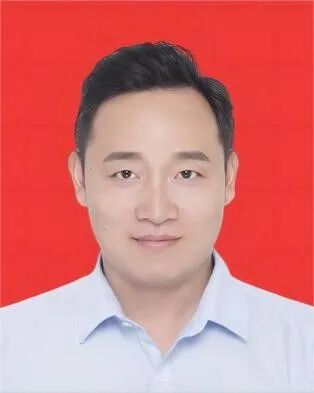
Biography of Chen Dan
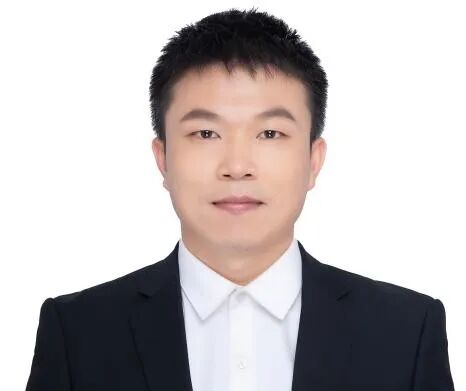
Dr. Chen Dan is a Associate Researcher and a Shenzhen Reserve-level High-level Talent. He serves as the Deputy Secretary-General of the Nondestructive Testing Branch of Shenzhen Mechanical Engineering Society and an expert of the working group for formulating industrial standards on nondestructive testing under the Chinese Mechanical Engineering Society. Currently, he works at the Institute of Ultrasonic Technology, Shenzhen Polytechnic University, and holds the position of Director of the Shenzhen Polytechnic-ChengTan Clean Energy Ultrasonic Testing Technology R&D Center. He primary research directions include laser ultrasonic detection, high-frequency ultrasonic microscopic imaging, and ultrasonic nondestructive characterization of material microstructure and properties. He has presided over more than 10 scientific research projects and published over 20 SCI/EI papers in top-tier journals such as Composites Science and Technology, NDT & E International, Optics and Laser Technology, IEEE Transactions on Instrumentation and Measurement, Ultrasonics, and Applied Acoustics.