Conference Info
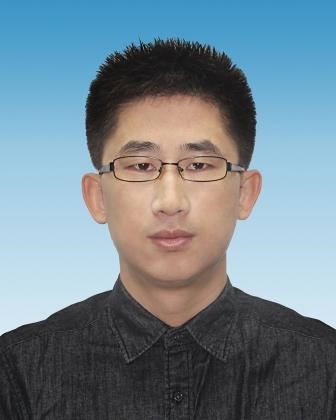
Yunze He is a Professor with College of Electrical and Information Engineering, and Group Leader of Intelligent Sensing, Detection and Reliability with Hunan University (Top 30 in China). He has chaired or participated in more than 30 projects including NSFC, The Engineering and Physical Sciences Research Council (EPSRC), The Royal Society etc. He has been awarded IEEE Senior Member in 2023, Royal Society Newton Mobility Grant in 2018. From 2020-2025, he is selected into World’s Top 2% Scientists (Stanford University). From 2021-2026, he is selected into Highly Cited Chinese Researchers (Elsevier). In 2023, he is selected into Best Scientists (Resaerch.com). He has published more than 100 academic papers in journals, which have been cited more than 8000 times in Google scholar and the h-index is 52. His research interests include nondestructive testing (NDT) and unmanned systems intelligent sensing.
LPBF Ti6Al4V Alloy Laser Ultrasonic Testing: Simulation and Experimental Study
of Polycrystalline Microstructure
Hu Ping
Laser powder bed fusion (LPBF) technology is widely used in high-end manufacturing sectors such as aerospace and biomedical engineering. However, internal defects such as pores, cracks, and inclusions critically compromise the mechanical performance and long-term reliability of LPBF components. Laser ultrasonics, as a non-contact, broadband novel non-destructive testing (NDT) method, offers an effective solution for defect detection in additively manufactured components. To systematically investigate laser ultrasonic testing of LPBF Ti6Al4V alloy, this study combines a numerical simulation with experimental validation. Specifically, a multi-physics coupled finite element model is developed, incorporating Voronoi-based polycrystalline microstructures to accurately characterize the material's anisotropic behaviour. Simulation results indicate that the grain microstructure significantly affects the propagation velocity, attenuation, and waveform characteristics of laser-generated ultrasonic waves. Furthermore, a simulation model that captures the interaction of laser ultrasonics with surface, subsurface, and internal microdefects is established to explore how different defect types influence on the ultrasonic signals. In the laser ultrasonic experimental validation, a 90 μm internal defect in an LPBF Ti6Al4V specimen is successfully identified. Through advanced signal analysis and processing, high-frequency noise is effectively suppressed, enabling high-resolution defect imaging. Collectively, this study provides a solid theoretical foundation and technical support for high-precision defect detection in metal additively manufactured components. It also holds significant implications for quality control in high-end equipment manufacturing. The systematic investigation deepens the understanding of defect detection mechanisms in LPBF Ti6Al4V materials and offers new directions and methodologies for future developments in non-destructive testing technology.
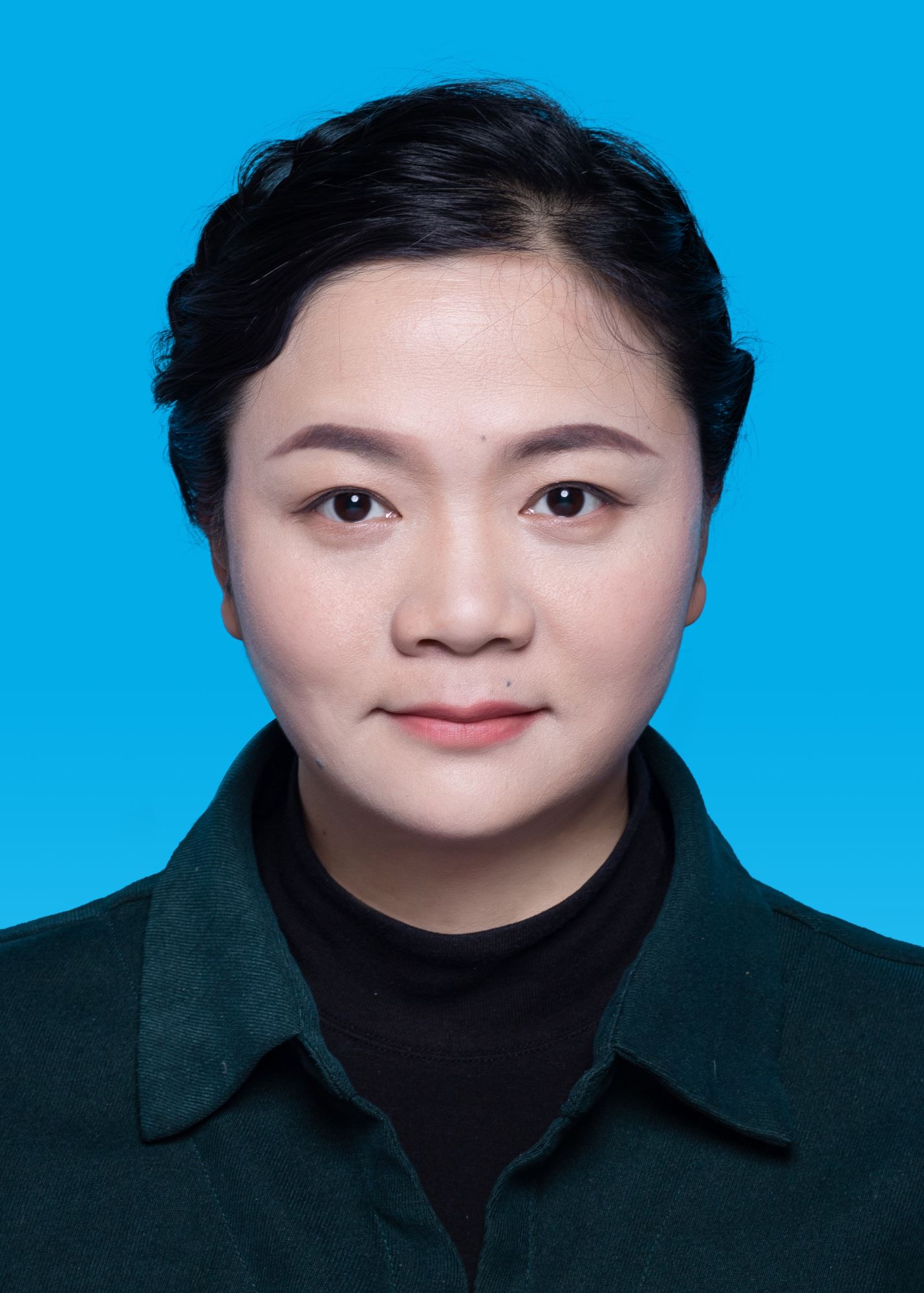
Dr. Ping Hu, Associate Professor at Wuhan University. She currently serves as a member of the Ultrasonic Testing Committee of the Chinese Society for Non-destructive Testing, a member of the Acoustic Instrument Committee of the China Instrument and Control Society, an executive member of the council of the Mechanics Society of Hubei Province, and a technical expert of National Technical Committee 56 on Non-destructive testing of Standardization Administration of China. She is also a senior member of the Chinese Mechanical Engineering Society and a senior member of the China Instrument and Control Society. Her research focuses on ultrasonic wave propagation, ultrasonic microstructure characterization of metallic materials, ultrasonic backscattering, and ultrasonic non-destructive testing (NDT) techniques. She has published representative research findings in journals such as The Journal of the Acoustical Society of America (J. Acoust. Soc. Am.), NDT&E International, and IEEE Transactions on Ultrasonics, Ferroelectrics, and Frequency Control. She has been awarded multiple national and provincial research grants, including sub‑projects of the National Key R&D Program of China, projects of the National Natural Science Foundation of China (NSFC), and a general project of the Natural Science Foundation of Hubei Province. She also holds several authorized national invention patents and has contributed to the approval of multiple industry group standards.