Conference Info
Invited Speaker of Parallel Session for Hydrogen Energy Equipment and Detection Technology at the 2026 FENDT Forum
Time:2026-06-06
Detection of impact damage of hydrogen storage cylinder using digital shearography
Sijin Wu
Carbon fiber overwrapped composite cylinder are highly susceptible to impact-induced internal damage during service, severely threatening the safety of hydrogen storage. Currently, there remains a lack of efficient and rapid non-destructive evaluation (NDE) methods for detecting impact damage in such cyl-inders. In this study, a self-developed shearography instrument combined with varying loading schemes was utilized to inspect Type III hydrogen storage cylinders subjected to varying degrees of impact dam-age across a wide range of impact energies. Subsequently, the defect excitation mechanisms and detec-tion efficacies under thermal and hydraulic loading modes were systematically compared. The experi-mental results indicate that the shearography system under thermal loading successfully reveals near-surface impact damage, demonstrating a non-linear growth trend between the detected near-surface damage area and the applied impact energy. Conversely, hydraulic loading effectively overcomes both thermal attenuation and thermal noise effects, enabling the excitation of deeper structural defects. This approach yields more complete defect contours and a significantly higher signal-to-noise ratio (SNR) in the interferometric fringes. Furthermore, the macroscopic impact location exhibited a high degree of spatial correlation with the ultimate rupture point during hydraulic burst testing. Specifically, structural degradation induced by an 857.75 J impact energy precipitated a minimum 11% reduction in the burst pressure.
Biography of Sijin Wu
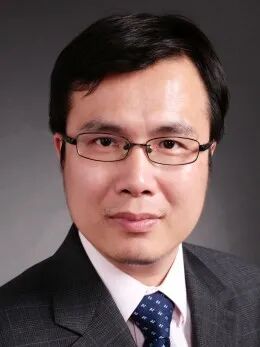
Dr. Wu Sijin is a professor and doctoral supervisor at the School of Instrument Science and Opto-Electronics Engineering, Beijing Information Science and Technology University. Leading the "Full-field Optical Testing Technology" innovation team and the "Advanced Optical Detection Technology and Instruments" Institute, he has long been dedicated to the research of digital speckle pattern interferometry, focusing on its novel principles, applications, and instrument development. In this field, he has spearheaded numerous projects, including grants from the National Natural Science Foundation of China, the Beijing Natural Science Foundation, and other research initiatives. Dr. Wu has authored over 100 academic papers, secured 17 patents, and developed a range of innovative instrument prototypes based on new principles. His work has been widely applied in multiple domains.
Numerical Simulation Study on the Stress Distribution of Typical Defects in Hydrogen Storage Type III Gas Cylinders
Kai Tan
Hydrogen energy is a critical technological pathway for China to achieve its "dual carbon" goals, with the safe and efficient storage and transportation of hydrogen being a key bottleneck to its large-scale application. A finite element analysis (FEA) was conducted to examine the stress distribution in a Type III composite overwrapped pressure vessel (COPV) during the filling process. Artificial defects, including dents, wall thinning, and cracks, were introduced in both the liner and the composite overwrap. The results indicated that stress concentrations near the defects were significantly higher than in defect-free vessels. Among the three defect types, cracks induced the highest stress, reaching 8172 MPa, exceeding the material's allowable stress. The other two defects also led to stress levels beyond the allowable limit. Comprehensive analysis suggests that crack defects pose the highest risk of causing failure in the composite overwrap.
Biography of Kai Tan
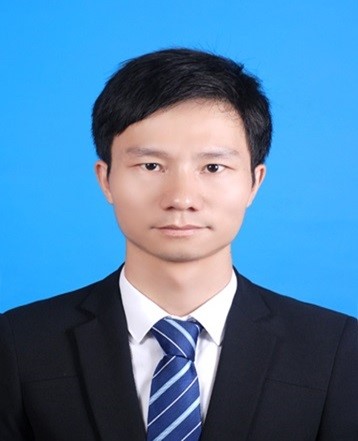
Dr. Tan Kai is a Senior Engineer and a doctoral graduate (Ph.D. in Engineering Thermophysics, 2012) from Huazhong University of Science and Technology. Since joining the Hubei Special Equipment Inspection and Testing Institute in 2017, he has been actively engaged in the safety and efficient engineering application of hydrogen and ammonia energy, inspection technology for pressure equipment, and the development of energy-saving technologies for boilers. He holds several key academic and professional roles, including being a member of the National Technical Committee for Standardization of Combustion Energy Conservation and Emission Reduction, a member of the Hubei Provincial Technical Committee for Standardization of Special Equipment, and an off-campus master’s supervisor for engineering students at Huazhong University of Science and Technology. He is also recognized as a mid-career technical expert by the China Special Equipment Inspection Association and serves as an expert for the Hubei Energy Conservation Association. Dr. Tan has made substantial contributions to research and innovation, having participated in two National Key R&D Programs and led or been involved in four scientific projects under the State Administration for Market Regulation. He has also taken charge of or contributed to three key projects funded by the Hubei Provincial Department of Science and Technology and one project under the Hubei Provincial Administration for Market Regulation, in addition to over ten other scientific initiatives. His academic output includes more than ten SCI/EI-indexed papers, over twenty authorized patents, co-authorship of two academic monographs, participation in the development of more than twenty national, local, and group standards, and the publication of five software copyrights. His work has been recognized with numerous awards, including two provincial/ministerial-level Science and Technology Progress Awards (Second Class), a Second Prize from the China Industry-University-Research Cooperation Promotion Association, a First Prize from the China Railway Construction Group, a Second Prize from the China Special Equipment Inspection Association, and a First Prize from the Boiler Water Treatment Association.
Research on Multi-Parameter Detection of Inclusion Defects in Carbon Fiber Composites Using Industrial CT Method
Yan Shi
Carbon fiber reinforced polymer (CFRP) composites, known for their high strength and light weight, are widely used in hydrogen storage and transportation, aerospace, offshore wind power, and other fields. Industrial computed tomography (CT) is an effective inspection method for CFRP composites, but challenges remain in detecting small-size defects and classifying defect types. This study focuses on inclusion defects in CFRP composite hydrogen storage cylinders. Industrial CT simulations were conducted for steel, titanium, and aluminum inclusions of different sizes, and powder samples as well as CFRP specimens containing inclusion defects were prepared. A systematic analysis was performed on multiple parameters obtained from industrial CT, including grayscale values and measured defect dimensions. Experimental results showed that when the industrial CT voxel size was 0.1 mm, the measurement error for inclusion defects of 0.3 mm and above was below 20%. Based on the linear relationship observed between the actual size of steel balls (0.2–0.6 mm) and industrial CT grayscale values, a method for calculating the size of small inclusion defects (0.2–0.3 mm, corresponding to 2–3 times the voxel size) in CFRP composites was proposed. Compared to the traditional full-width at half-maximum (FWHM) method, this approach effectively reduces measurement error. Additionally, an auxiliary classification method for inclusion defects was established based on industrial CT grayscale values and measured dimensions, providing technical support for accurate size measurement and type discrimination of small-size inclusion defects.
Biography of Yan Shi
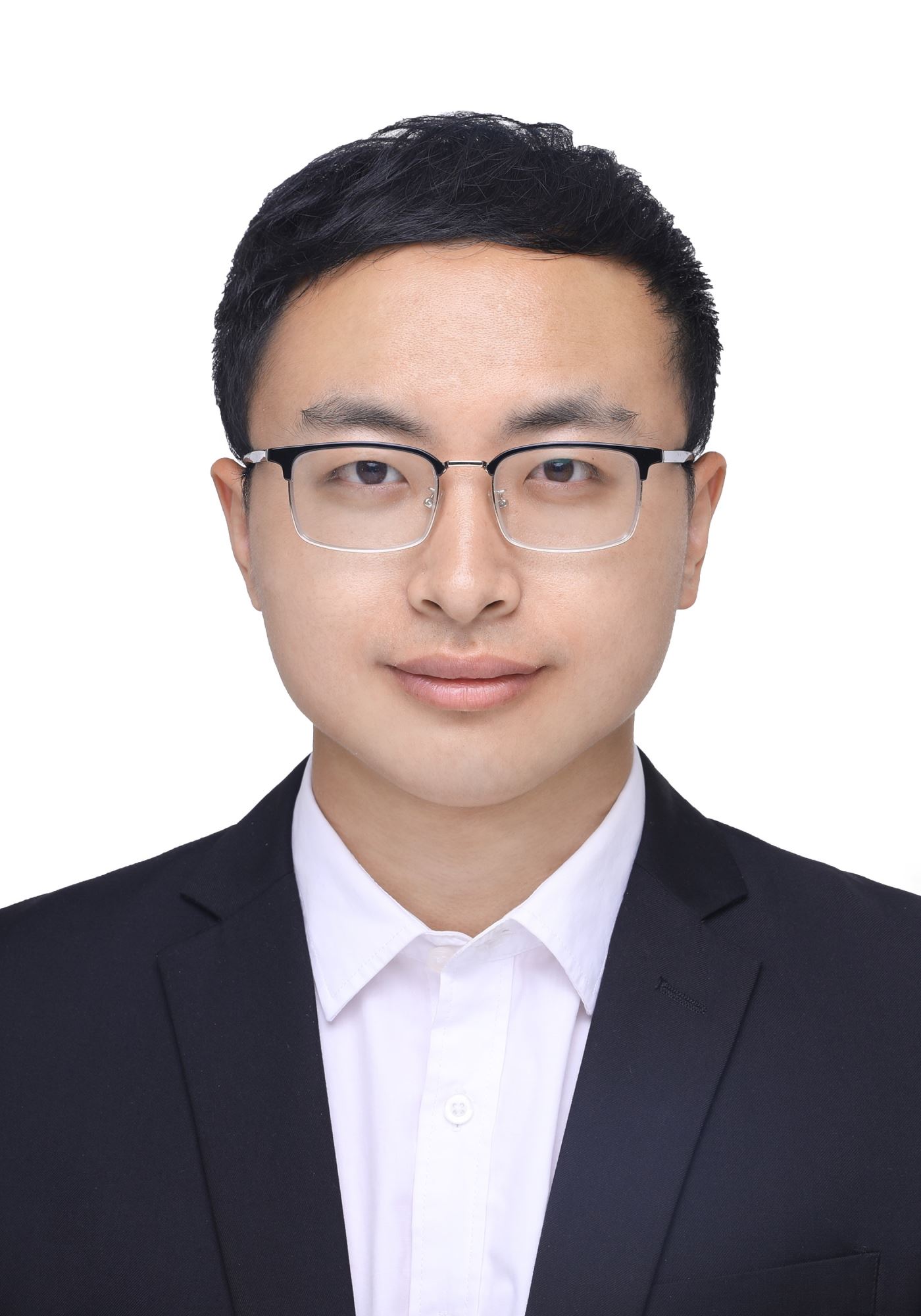
Dr. Shi Yan is a Senior Engineer, holding a Ph.D. in Materials Science from Shanghai Jiao Tong University and having completed a joint postdoctoral program at Zhejiang University. He was selected for the Zhejiang Association for Science and Technology Young Talent Lifting Program. Currently, Dr. Shi serves as the Deputy Director of the First Research Division of the Technology Innovation Center and Director of the Hydrogen Energy Storage and Transportation Equipment Research Center at the Zhejiang Academy of Special Equipment Science. Since earning his Ph.D. in 2020, he has been dedicated to research on testing technologies for hydrogen energy storage and transportation equipment and the development of scientific and technological platforms at the Academy. Dr. Shi has led or participated in 6 provincial/ministerial-level research projects and 6 provincial bureau-level projects. He holds 9 authorized invention patents and has published 19 academic papers in journals and conferences such as Nature Communications, Materials Science and Engineering: A, and the ASME Pressure Vessels and Piping Conference. His achievements include receiving the First Prize of the Zhejiang Special Equipment Science and Technology Award and playing a leading role in establishing the Zhejiang Hydrogen Energy Storage and Transportation Equipment Quality Inspection Center.
Progressive Damage Analysis of Composite Materials: A Case Study of Type III Hydrogen Storage Cylinder
Guanxi Zhao
To deeply investigate the damage mechanism of composite gas cylinders under ultimate pressure conditions and clarify their failure modes, this paper establishes a progressive damage analysis model suitable for the filament-wound layered structure of gas cylinders. The Hashin-3D failure criterion is adopted as the damage initiation criterion, comprehensively considering multiple failure modes including fiber tension/compression, matrix tension/compression, and delamination. Meanwhile, the Camanho stiffness degradation scheme is introduced to describe the stiffness reduction behavior during material damage evolution through an exponential decay approach. Through numerical simulation of the internal pressure loading process of the gas cylinder, the evolution laws and temporal characteristics of fiber damage, matrix damage, and delamination damage are systematically analyzed. The results indicate that the primary and secondary order of failure of the composite material in the cylinder winding layers is: fiber damage > matrix damage > delamination damage. When the internal pressure reaches 115 MPa, the fibers in the transition zone between the cylinder barrel section and the dome become almost completely damaged, making this region the weak link for cylinder burst failure. Based on the maximum strain criterion and the hoop strain criterion, the ultimate burst pressure of the cylinder is predicted to be 116.4 MPa, with the burst location at the barrel transition section. The predicted results are in good agreement with the progressive damage simulation results, verifying the accuracy and engineering applicability of the proposed analysis model in damage evolution description and burst failure prediction.
Biography of Guanxi Zhao
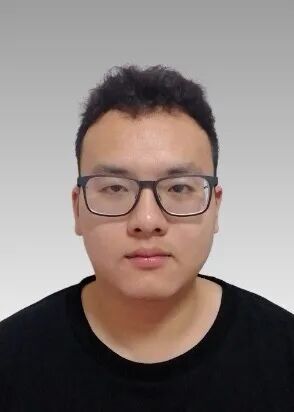
Zhao Guanxi is an engineer with a master’s degree at the Sichuan Institute of Special Equipment Inspection. His primary research focuses on the development of high-pressure hydrogen storage equipment, the design of fiber-reinforced composites, and the optimization of their safety performance. He has published over ten academic papers in journals such as Oil & Gas Storage and Transportation, Polymers, and Scientific Reports. He delivered a keynote speech at the 33rd National Natural Gas Academic Annual Conference, where his paper received the Outstanding Paper Award (First Prize). Mr. Zhao has also been funded by the Sichuan Science and Technology Innovation (Seedling Project) Cultivation Program and, as a key contributor, participated in projects nominated for the Sichuan Science and Technology Award.