Conference Info
Invited Speaker of Parallel Session for Sensors and Instruments at the 2026 FENDT Forum
Time:2026-06-06
Triboelectric Self-Powered Sensing Technology for Online Non-Destructive Testing of High-End Equipment
Jianhai Zhang
During high-speed rotation, complex machining, and multi-condition service, high-end equipment places increasing demands on state perception and intelligent diagnosis. Triboelectric nanogenerators, which integrate mechanical energy harvesting with active sensing capabilities, provide a new sensing pathway for online non-destructive testing of equipment. This presentation focuses on triboelectric self-powered sensing technology and introduces its applications in rotating machinery health monitoring, CNC machine tool process state perception, surface quality evaluation, and complex defect identification, providing new technical support for predictive maintenance and intelligent operation and maintenance of high-end equipment.
Biography of Jianhai Zhang
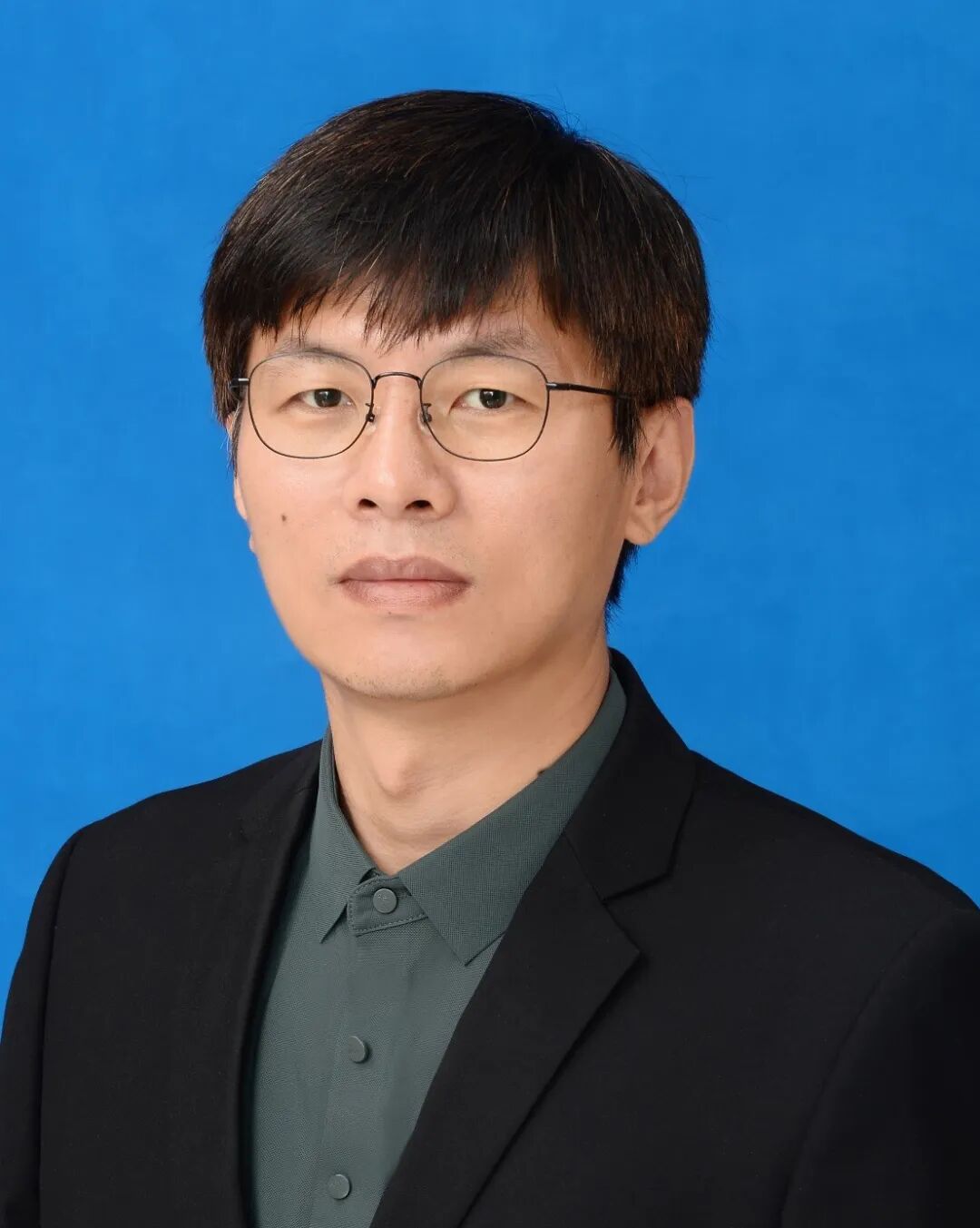
Zhang Jianhai is a Professor at the School of Mechanical and Aerospace Engineering, Jilin University. He currently serves as the Deputy Director of the Ministry of Education Key Laboratory of CNC Equipment Reliability, the Executive Deputy Director of the Jilin International Joint Research Center for Material Service Performance, and a standing council member of the Jilin Mechanical Engineering Society, where he also heads the Nondestructive Testing Branch. He has led 13 research projects, including initiatives under the National Key R&D Program, pre-research projects, rapid response projects, fundamental technology research projects, and the Young Scientists Fund of the National Natural Science Foundation of China. Professor Zhang has published 86 SCI-indexed papers in high-level journals such as Mechanical Systems and Signal Processing (MSSP) and Advanced Functional Materials (AFM). He has spearheaded or contributed to the formulation of 2 national standards and holds over 40 authorized invention patents. His research achievements have been applied in engineering contexts for the nondestructive testing and monitoring of critical components across multiple fields, contributing to the advancement of intelligent inspection and monitoring technologies for high-end equipment in China. His work has facilitated the application of nondestructive testing and monitoring technologies in aerospace, equipment engineering, rail transportation, and related sectors. His accomplishments have been recognized with awards including the Jilin Provincial Technology Invention Award (First Prize), the National University Faculty Self-Developed Experimental Teaching Instrument Award (First Prize), the Roadshow Bronze Award, and the National Quality Instrument Award.
Development of Structural Health Monitoring Technologies and High-Performance Durable Structures for Marine Engineering Applications
Xianwen Hu
Offshore engineering structures are developing rapidly, but steel and steel-reinforced concrete components suffer from severe corrosion, threatening operational safety and service life. This creates an urgent need for advanced structural health monitoring (SHM) technologies and durable structural systems. This study addresses these needs by developing two complementary solutions: a guided wave-based SHM method for submerged components and a hybrid FRP-UHPC tubular member. The SHM method excites guided waves in unsubmerged regions, which propagate into submerged zones and detect damage via scattering signals, offering wide coverage and high sensitivity to minor defects. Limitations and potential applications of the technique are analyzed. The FRP-UHPC tubular member, tailored for offshore wind turbine towers and other marine applications, leverages the high performance and durability of FRP and UHPC and is well-suited for harsh marine environments. A number of experimental and analytical tests confirm the member's excellent mechanical performance under compression, flexure, and torsion. Additionally, preliminary tests were conducted and found that guided waves propagate over meter-scale distances in the composite members and are highly sensitive to fatigue damage evolution. This work demonstrates that the proposed SHM method and FRP-UHPC tubular members are promising technologies for improving the safety and durability of offshore engineering structures.
Biography of Xianwen Hu

Dr. Hu Xianwen is a specially appointed Associate Researcher at Dongguan University of Technology. He earned his Ph.D. from the University of Adelaide, Australia, under the supervision of Prof. Ching-Tai Ng, a leading expert in structural health monitoring. His research primarily focuses on structural health monitoring of marine structures and FRP-UHPC composite systems. Dr. Hu has led one open project funded by the Guangdong Provincial Key Laboratory of Urban Lifeline Engineering for Smart Disaster Prevention and Emergency Response Technology. He has also been selected for the Ministry of Education’s Postdoctoral Overseas Talent Introduction Program and the Guangdong Overseas Postdoctoral Talent Support Program. He has published over 20 high-quality academic papers in internationally renowned journals, including Thin-Walled Structuresand Cement and Concrete Composites, with 11 of them as the first or corresponding author. Additionally, he has presented six papers at international conferences and was invited to contribute a chapter to the commemorative monograph for the 10th anniversary of the Australian Network for Structural Health Monitoring (ANSHM). Dr. Hu serves as a youth editorial board member for the Chinese core journal Composites Science and Engineeringand the international journal Safety Science and Technology. He is also an invited reviewer for multiple SCI-indexed journals, including the Journal of Sound and Vibration.