Conference Info
Invited Speaker of Parallel Session for AI Non-destructive Testing at the 2026 FENDT Forum
Time:2026-06-06
Intelligent Ultrasonic Testing: A Physics-Data Dual-Driven Paradigm for Wave Forward Modeling and Inversion
Lishuai Liu
Ultrasonic nondestructive testing is undergoing a paradigm shift from "physics-driven" to "physics-data dual-driven" intelligent approaches. This report focuses on two core challenges: wave forward modeling and parameter inversion. In forward modeling, traditional numerical methods struggle to balance accuracy and efficiency, while physics-informed neural networks suffer from spectral bias and loss imbalance. In inversion, although full-waveform inversion offers high-resolution potential, it is limited by high computational cost and dependence on initial models. To address these challenges, we propose a series of methods that integrate physical priors with neural operator frameworks — achieving high-fidelity prediction of high-frequency transient wavefields in forward modeling and establishing a global inverse mapping from array data to medium parameters in inversion. Experimental results demonstrate that our methodology surpasses traditional ray theory and iterative inversion schemes in terms of fidelity, efficiency, and robustness. We anticipate that this paradigm will provide valuable references and insights for ultrasonic nondestructive testing and, more broadly, for wave-based physical detection.
Biography of Lishuai Liu

Prof. Liu Lishuai is a doctoral supervisor and recipient of the National Science Fund for Excellent Young Scholars at East China University of Science and Technology. He leads the Young Scientist Project of the National Key Research and Development Program. Professor Liu has been recognized in several prestigious talent programs, including the China Association for Science and Technology Young Talent Support Project, the Shanghai Morning Light Scholar Program, and the Shanghai Young Science and Technology Talent Sailing Program. His research focuses on intelligent detection and imaging technologies, as well as the development of scientific instruments, to address the need for precise health monitoring of high-end equipment in sectors such as aerospace, new energy, and nuclear power. He holds multiple academic and professional appointments, including Vice Chairman of the Acoustical Sensing and Instrumentation Branch of the Acoustical Society of China, Committee Member of the Acoustic Instrumentation Professional Committee of the China Instrument and Control Society, and Committee Member of the National Technical Committee on Nondestructive Testing and the National Technical Committee on Weld Testing and Inspection. Over the past five years, he has led more than 10 national and provincial-level research projects, published over 40 SCI-indexed papers as the first or corresponding author, filed or obtained over 40 invention patents, and contributed to the development of 4 national standards. His achievements have been recognized with numerous awards, including the First Prize of Science and Technology Progress Award from the China Petroleum and Chemical Industry Federation, the First Prize of Gansu Provincial Science and Technology Progress Award, and the First Prize of China Electric Power Innovation Award.
Research on Ultrasonic Plane Wave Imaging Method Based on Multi-Angle Delay-and-Sum Squaring
Hui Zhang
Ultrasonic plane waves are widely used in the field of nondestructive testing due to their advantages, such as a low number of transmissions and fast acquisition speeds. During propagation within a structure, strong reflections from structural boundaries tend to interfere with scattering echoes from defects. Traditional imaging methods rely on simple delay-and-sum strategies, which have limited sidelobe suppression capabilities. This often results in artifacts near structural boundaries, leading to insufficient resolution and low contrast, thereby limiting the accurate identification and quantitative characterization of defects. To address these shortcomings, a multi-angle delayed sum squared ultrasonic plane wave imaging method is proposed. First, the plane wave acquisition data undergoes complex envelope modulation to obtain a baseband resolution signal. A square-root nonlinear transformation is then applied to the amplitude while preserving phase information, effectively highlighting weak scattering defect signals and suppressing strong reflection interference from structural boundaries. Furthermore, by introducing the spatial coherence between angles and array elements, the multi-angle plane wave signals are coherently superimposed. Subsequently, a square root operation is applied to the superimposed result to enhance the coherent signal components, and the processed results from each receiving array element are synthesized through superposition, thereby achieving high-quality defect imaging. Finally, the method is validated through experiments on the imaging of defects within the structure. The experimental results demonstrate that the multi-angle delayed sum of squares ultrasonic plane wave imaging method, by fully utilizing the spatial coherence characteristics between plane wave angles and array elements, exhibits significant advantages in defect energy focusing, imaging contrast, and background noise suppression. It achieves high-resolution, rapid imaging and quantitative non-destructive evaluation of internal structural defects.
Biography of Hui Zhang
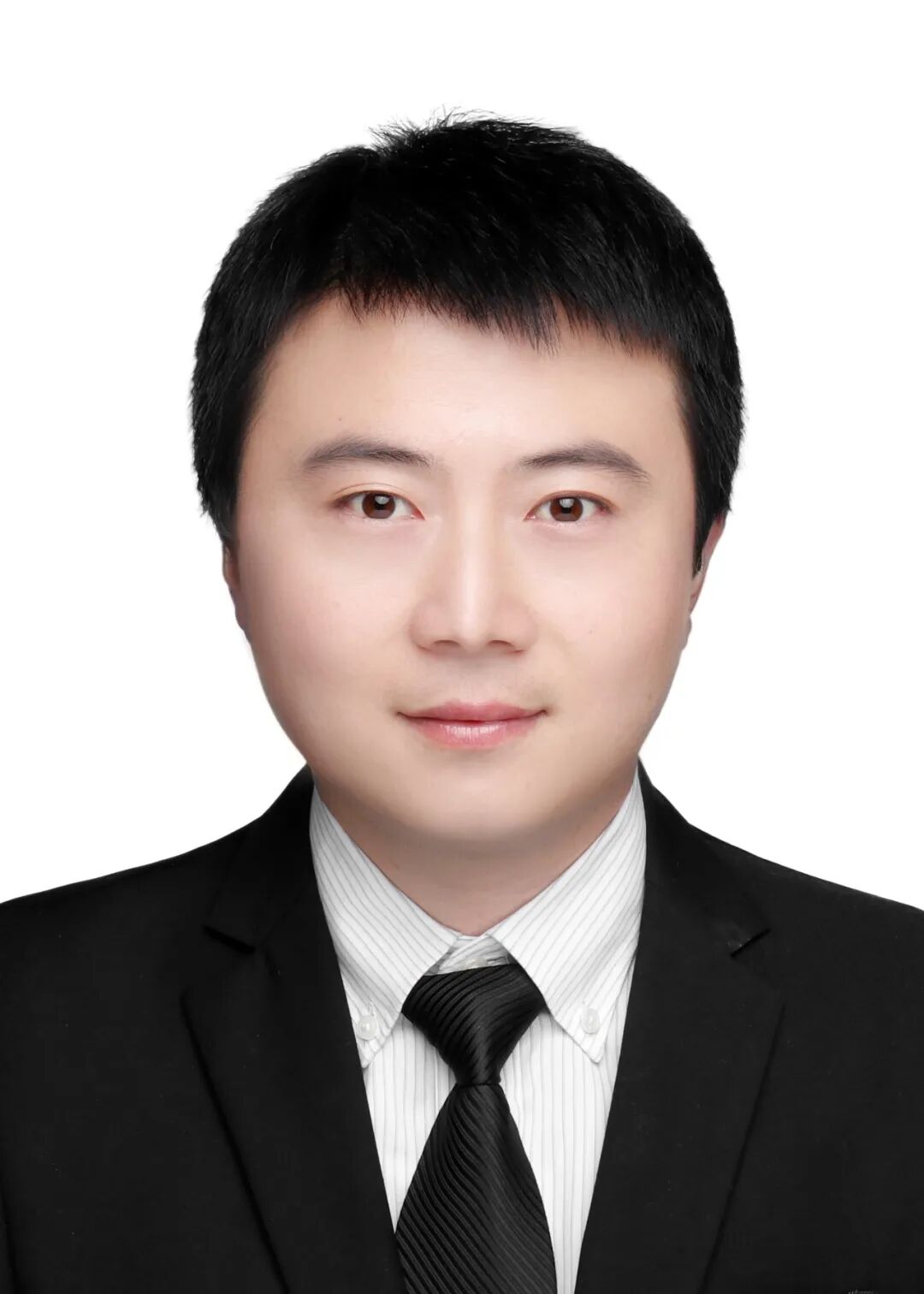
Professor Zhang Hui is a professor at Shanghai University of Engineering Science. His research primarily focuses on intelligent ultrasonic nondestructive testing, signal and information processing, and structural health monitoring and methodologies. He has led projects funded by the National Natural Science Foundation of China, including the Young Scientists Fund and General Program, and has participated in national and provincial-level research initiatives such as sub-projects of the National Key Research and Development Program and key support projects of the Shanghai Municipal Science and Technology Commission. Professor Zhang has published over 30 academic papers related to ultrasonic testing, imaging, and intelligent signal processing in journals including Mechanical Systems and Signal Processing (MSSP), Ultrasonics, and Applied Acoustics, and holds more than 10 authorized patents. He serves as a committee member of the Testing Acoustics Branch and the Acoustic Sensing and Instrumentation Branch of the Acoustical Society of China, and as a youth editorial board member of the journal Urban Mass Transit.
Intelligent visualization electromagnetic non-destructive testing technology for underwater steel structures
Xinan Yuan
The underwater steel structure of marine equipment has been in extreme working conditions for a long time, which is prone to dangerous defects such as cracks, and urgently requires the development of high reliability non-destructive testing technology. This report focuses on the demand for defect detection in underwater steel structures of marine equipment, explores new electromagnetic non-destructive testing technologies, develops intelligent visual representation methods, develops a series of electromagnetic testing instruments and equipment, and explores the future development direction of defect detection in underwater steel structures.
Biography of Xinan Yuan
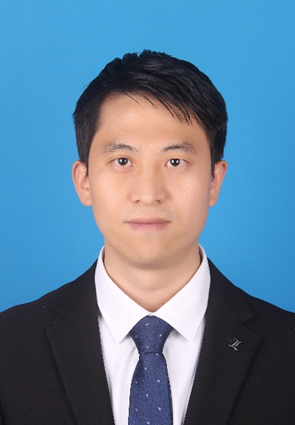
Prof. Yuan Xin'an, born in March 1990, is a member of the Chinese Communist Party, a professor, and a doctoral supervisor. He has been selected for prestigious programs including the National Postdoctoral Innovative Talent Support Program, the Shandong Taishan Scholar Program, and the Shandong Young Science and Technology Talent Support Project. His research primarily focuses on nondestructive testing and health monitoring technologies for offshore engineering equipment, nuclear power facilities, and special equipment. His work has been recognized with five provincial/ministerial awards, including the Marine Engineering Science and Technology Invention Award (First Prize), the Shandong Science and Technology Progress Award (Second Prize), the Qingdao Science and Technology Progress Award (First Prize), and the China Association of Work Safety Science and Technology Invention Award (First Prize). Professor Yuan has led over 20 national and provincial research projects, such as the National Natural Science Foundation General and Young Scientists Programs, the Young Scientist Project of the National Key Research and Development Program, and sub-projects of major national science and technology initiatives. He has published more than 50 SCI-indexed papers as the first or corresponding author, authored three monographs and one textbook, and obtained over 50 invention patents. Among these, 10 patents have been licensed for commercialization, generating licensing fees exceeding 15 million RMB. Additionally, he has played a key role in drafting five national, local, and industrial standards.
Temperature Sensing Based on Ultrasonic Diffuse Field and Meta-Transducer
Qi Zhu
Ultrasound, through processes such as multiple scattering, interacts repeatedly with internal structures to achieve dense sampling. The resulting ultrasonic diffuse field is highly sensitive to changes in defects, stress, temperature, and other factors. Compared to conventional online monitoring methods such as thermocouples and infrared thermal imaging, the ultrasonic temperature measurement method offers higher sensitivity, stronger noise immunity, and the ability to perform non-invasive detection. However, commercial ultrasonic transducers fail to operate properly at high temperatures due to the loss of functionality of piezoelectric materials. Constrained by limited accessible space in equipment, conventional transducer designs cannot effectively achieve thermal isolation while ensuring accurate temperature measurement. In this work, a metamaterial transducer is designed based on the triply periodic minimal surface (TPMS) concept. A theoretical model coupling heat conduction and the diffuse field is established, and artificial intelligence methods are employed for multi-objective parameter optimization, achieving a 60% weight reduction. The optimized metamaterial transducer can operate at temperatures up to 190°C, with a static error of only 0.61°C and a dynamic error of 1.4°C for online temperature monitoring using the ultrasonic diffuse field. This method also holds promise for further real-time monitoring and evaluation of internal performance changes.
Biography of Qi Zhu

Dr. Zhu Qi is an associate professor at the School of Mechatronic Engineering and Automation, Shanghai University. He earned his bachelor’s degree from Xiamen University, his master’s degree from Zhejiang University, and his Ph.D. from the École Centrale de Nantes, France. He previously worked as a senior researcher at the United Technologies Research Center in the United States, where he conducted research on advanced composite materials. Dr. Zhu has received research funding from multiple sources, including the National Natural Science Foundation of China and the Shanghai Young Science and Technology Talent Sailing Program. With a multidisciplinary background spanning physics, mechanics, inspection, and materials science, he has long been engaged in research on ultrasonic testing and advanced manufacturing processes. His work focuses on developing ultrasonic testing and imaging methods for a variety of advanced manufactured products, integrating novel inspection techniques and process analysis to ultimately enhance product quality.
Dual-branch Dual-task Feature Fusion Microcrack Identification Method Based on Nonlinear Phased Array Imaging
Xiangyan Ding
Conventional linear ultrasonic imaging techniques are capable of imaging only large-scale cracks and are inherently limited in detecting sub-millimeter microcracks. Although nonlinear ultrasonic phased array imaging can detect microcracks, the imaging region exceeds the actual physical extent of the microcrack, rendering it incapable of resolving the microcrack's length and orientation. To address these challenges, deep learning is introduced for microcrack parameter prediction. To accommodate the detection requirements of low-discriminability imaging maps and effectively extract subtle features—including microcrack amplitude, pixel area, and discreteness—as well as spatial features, a dual-branch dual-task feature fusion microcrack identification method based on nonlinear phased array imaging is proposed, enabling simultaneous prediction of microcrack length and orientation. The residual architecture of YOLOv8 is leveraged to exploit shallow-layer features, while spatial capsules with dynamic routing are employed to capture target spatial features. Concurrently, a hard-example-aware class attention mechanism is incorporated, and physical constraints are embedded into the loss function to eliminate invalid samples that violate physical laws. The sum-frequency, difference-frequency, and second-harmonic imaging maps exhibit varying prediction accuracies for microcrack length and orientation. By fusing the complementary advantages of these three nonlinear imaging modalities for microcrack parameter detection, the overall prediction accuracy is enhanced. A dual-branch dual-classification network, based on pixel-enhanced YOLOv8 and capsule networks, achieves high-accuracy identification of the length and orientation of sub-millimeter microcracks.
Biography of Xiangyan Ding
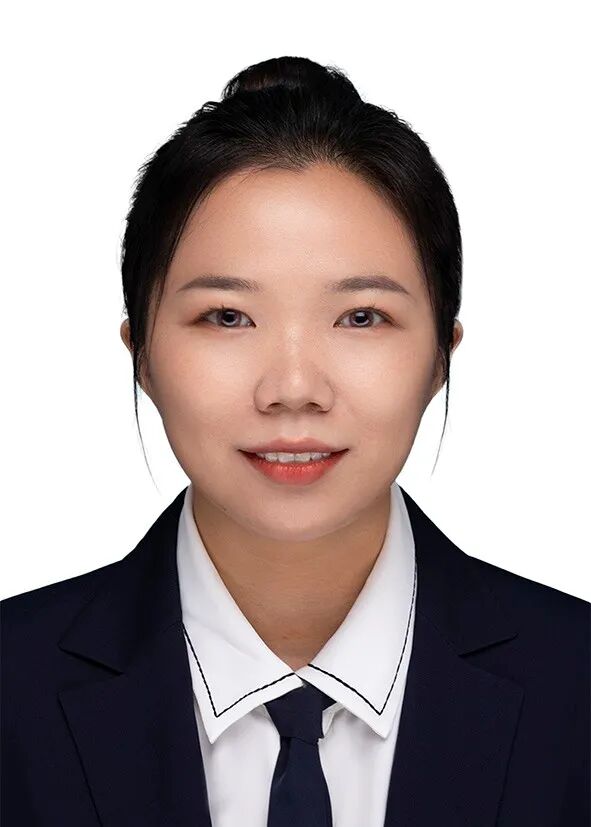
Dr. Ding Xiangyan is an Associate Professor and Master's Supervisor at Hebei University of Technology. She has led multiple national and provincial research projects, including the National Natural Science Foundation (General Program and Young Scientists Fund), the Hebei Youth Fund, the Tianjin Natural Science Foundation, and a sub‑project under the National Major Scientific Instrument and Equipment Development Program. Her research focuses on addressing critical challenges such as early‑stage damage assessment and micron‑level crack imaging. She specializes in nonlinear ultrasonic evaluation methods, including second‑harmonic and frequency‑mixing techniques, and employs nonlinear ultrasonic phased arrays to achieve the identification and imaging of multiple spatially distributed micro‑cracks. Her research outcomes have been applied to key technological tasks undertaken by organizations such as CRRC Changchun Railway Vehicles Co., Ltd., Aisida Aerospace Technology Co., Ltd., Xinjiang Tianfu Energy Co., Ltd., and Woer Heat Transmission Co., Ltd. Dr. Ding has published over ten SCI‑indexed papers in journals including NDT&E International, International Journal of Mechanical Sciences, and Mechanical Systems and Signal Processing, holds four authorized patents, and has contributed to the formulation of one group standard. She also serves as a member of the Health Monitoring Committee of the Chinese Society for Composite Materials.