Conference Info
Invited Speaker of Parallel Session for Petroleum Pipe and Equipment at the 2026 FENDT Forum
Time:2026-06-06
Key Technologies and Applications of Quasi-Static Electromagnetic Non-Destructive Testing for Defects in In-Service Steel Pipelines
Bo Hu
Steel pipelines, critical for oil, gas, chemical, and thermal transmission, are vital for national energy security and economic stability. During long - term service, they are prone to wall thinning and crack formation from corrosion, stress, and mechanical damage. Defect failure can cause large economic losses or accidents. To solve these problems, the research team has advanced quasi - static electromagnetic testing technologies, achieving significant innovations in electromagnetic field theory, defect identification/evaluation, and detection instrument development.
(1) A multidimensional theoretical model for eddy current field distribution and a quantitative evaluation method for pulsed eddy current/transient electromagnetic testing of corrosion defects in coated/underground steel pipelines were developed. This study clarified detection blind zones and key eddy current phenomena around pipelines, elucidated the interaction mechanisms between dynamic eddy fields and probe structures, established a quantitative defect identification model based on spatial convolution of Gaussian distribution excitation fields with defect geometry parameters, and proposed an interference suppression technique using Fourier harmonic trajectory analysis.
(2) This study established a theoretical framework for weak magnetic detection of nonferromagnetic metal materials under geomagnetic conditions and developed a quantitative analytical model for stress - magnetization relationships in austenitic stainless steel for the first time. It proposed statistical characterization and demixing methods for multi - source interference effects. The research elucidated the detection mechanism of weak magnetic anomalies induced by component defects and base material magnetic permeability differences under geomagnetic conditions. By integrating martensitic phase transition kinetics with stress - magnetization theory, a quantitative analytical model for stress - magnetization relationships in austenitic stainless steel was constructed. A statistical characterization and demixing approach was introduced to handle multi - source interference from noise, stress, and defects, using a collaborative processing algorithm of blind source separation, parameter optimization, and support vector machines.
(3) A series of quasi-static electromagnetic detection sensing devices and instrument systems integrating magnetic field focusing, common-mode suppression, and intelligent positioning were developed. The invented cross-scale high-efficiency magnetic field focusing detection system enhances the detection field directionally, and the dual-coil common-core gradient magnetometry sensor suppresses common-mode interference effectively. A visual-guided robotic positioning system based on a multi-parameter model and high-precision calibration was developed, achieving sub-millimeter spatial positioning accuracy.
(1) A multidimensional theoretical model for eddy current field distribution and a quantitative evaluation method for pulsed eddy current/transient electromagnetic testing of corrosion defects in coated/underground steel pipelines were developed. This study clarified detection blind zones and key eddy current phenomena around pipelines, elucidated the interaction mechanisms between dynamic eddy fields and probe structures, established a quantitative defect identification model based on spatial convolution of Gaussian distribution excitation fields with defect geometry parameters, and proposed an interference suppression technique using Fourier harmonic trajectory analysis.
(2) This study established a theoretical framework for weak magnetic detection of nonferromagnetic metal materials under geomagnetic conditions and developed a quantitative analytical model for stress - magnetization relationships in austenitic stainless steel for the first time. It proposed statistical characterization and demixing methods for multi - source interference effects. The research elucidated the detection mechanism of weak magnetic anomalies induced by component defects and base material magnetic permeability differences under geomagnetic conditions. By integrating martensitic phase transition kinetics with stress - magnetization theory, a quantitative analytical model for stress - magnetization relationships in austenitic stainless steel was constructed. A statistical characterization and demixing approach was introduced to handle multi - source interference from noise, stress, and defects, using a collaborative processing algorithm of blind source separation, parameter optimization, and support vector machines.
(3) A series of quasi-static electromagnetic detection sensing devices and instrument systems integrating magnetic field focusing, common-mode suppression, and intelligent positioning were developed. The invented cross-scale high-efficiency magnetic field focusing detection system enhances the detection field directionally, and the dual-coil common-core gradient magnetometry sensor suppresses common-mode interference effectively. A visual-guided robotic positioning system based on a multi-parameter model and high-precision calibration was developed, achieving sub-millimeter spatial positioning accuracy.
Biography of Bo Hu
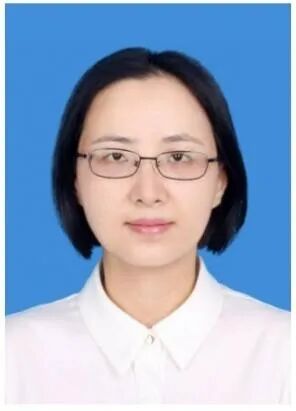
Prof. Hu Bo is a doctoral supervisor and serves as the Program Director of Measurement and Control Technology and Instrumentation at Nanchang Hangkong University. She also holds the position of Deputy Director of the Key Laboratory of Nondestructive Testing Technology, Ministry of Education. Prof. Hu has long been dedicated to theoretical and applied research in electromagnetic nondestructive testing technology and instrument development. She has been recognized as a Young Leading Scholar in Key Academic Disciplines in Jiangxi Province (2020) and later as a Leading Academic Talent (2024). She has led three projects funded by the National Natural Science Foundation of China, five provincial/ministerial-level research projects, and over ten industry-sponsored collaborative projects. As the first or corresponding author, she has published more than 30 SCI/EI-indexed papers in high-level journals such as NDT & E International and Measurement. Her research achievements have been compiled into two academic monographs published by Science Press: "Theory and Application of Transient Electromagnetic Testing for Buried Pipelines" and "Weak Magnetic Nondestructive Testing Technology". In addition, she holds more than 10 authorized invention patents.
Design of Ultrasonic Concentrator and Application Research in Gas Micro Leakage Detection of Pressure Pipeline
Zhinong Li
In order to solve the problem of long-distance effective detection of small gas leakage signals in pressure pipelines, a parabolic gas leakage ultrasonic condenser was designed, and the enhancement ability of the micro-leakage signal of the condenser was compared and analyzed, and a long-distance detection method of small leakage signal based on energy integration was proposed. On this basis, a mathematical model localization algorithm for the nonlinear super definite equations of leakage sound source based on acoustic energy attenuation is proposed, which solves the non-convexity problem in the localization algorithm, and solves the convex function optimization problem by the gradient descent-enumeration joint method, which has high accuracy. The experimental results show that the designed condenser has a significant enhancement ability for the ultrasonic signal of small leakage, and the energy integration algorithm is used to detect the 0.1mm leakage hole at a distance of 10m under the pipeline pressure of 0.2MPa. The positioning accuracy can also maintain the corresponding accuracy with the increase of the detection distance, and improve with the increase of the pressure in the tube, the aperture diameter, the sensor . spacing, and the number of sampling points, and the increase of the number of sampling points will not improve the positioning accuracy when the fence effect is eliminated, and the sampling frequency is independent when the Nyquist theorem is satisfied. The research results in this paper provide an important idea for the detection and location of gas leakage in pressure pipelines, and have obvious theoretical value and engineering application value.
Biography of Zhinong Li

Li Zhinong, a second level professor at Nanchang Hangkong University, doctoral supervisor. Ph.D. from Zhejiang University and postdoctoral fellow from Tsinghua University. Prof. Li is some Editorial board member for journals such as Journal of Vibration Engineering, Journal of Vibration and Shock, Journal of Vibration, Measurement and Diagnosis, Journal of Mechanical Strength, Mining & Processing Equipment, Journal of Ordnance Equipment Engineering, Journal of Bearing, Journal of Plant Maintenance and Engineering, Journal of Failure Analysis and Prevention. He is a member of the Academic Committee of Shaanxi Key Laboratory of Intelligent Monitoring of Mining Mechanical and Electrical Equipment, Vice Chairman of the State Monitoring Conference of the Non destructive Testing Branch of the Chinese Society of Mechanical Engineering, member of the Online Detection Technology and Intelligent Manufacturing Professional Committee of the Chinese Society of Metrology and Testing, member of the Equipment Intelligent Operation and Maintenance Branch of the Chinese Society of Mechanical Engineering, Vice Chairman of the Dynamic Signal Analysis Professional Committee of the Chinese Society of Vibration Engineering, member of the Rotor Dynamics Professional Committee, member of the Fault Diagnosis Professional Committee, member of the Mechanical Dynamics Professional Committee, member of the Dynamic Testing Professional Committee, and Executive Director of the Jiangxi Friction Society. His research field includes in Mechanical dynamics and fault diagnosis, intelligent detection and signal processing, new non-destructive testing technologies, metal material failure analysis and evaluation, pattern recognition and artificial intelligence. He has undertaken more than 50projects, including sub projects of national key research and development program, National Natural Science Foundation, China Postdoctoral Science Foundation, Key Laboratory Open Fund of the Ministry of Education, State Key Laboratory Open Fund, Provincial Key Laboratory Open Fund, Science Plan Project of the Provincial Department of Education, Key Project of Jiangxi Natural Science Foundation, Key Project of Jiangxi Science and Technology Plan, etc. 450 academic papers have been published in domestic and international academic journals and conferences, of which 260 have been indexed by SCI and EI. The published academic papers have entered the top tier paper platform of high-quality journals - Leader 5000. He won one second prize of the Ministry of Education Science and Technology Progress Award, one second prize of the Jiangxi Provincial Natural Science Award, one second prize of the Jiangxi Provincial University Science and Technology Achievement Award, one first prize of the China Occupational Safety and Health Association Science and Technology Award, one third prize of the China Aviation Society Science and Technology Award, and one first prize and six second prizes of the Henan Provincial Natural Science Excellent Academic Paper Award. He has obtained 40 invention patents and utility model patents, 8 software copyrights, and published 2 academic monographs. Both of these academic monographs have been supported by the Science Publishing Fund of the Chinese Academy of Sciences, and have been highly praised by well-known experts at home and abroad. He also published one textbook.
Research on Passive-and-Wireless Ultrasonic Pipeline Corrosion Detection Technology
Fangji Gan
Traditional ultrasonic testing technology relies on wired connections, resulting in bulky sensors and complex cabling, which limits its application in harsh environments like chemical plants and nuclear facilities, or in high-altitude and hazardous areas. Passive-and-wireless ultrasonic detection technology, by eliminating the power supply and cables at the sensor node, offers the potential for lightweight, remotely deployable inspection systems. However, existing techniques face a critical challenge: the amplitude of echo signals after wireless transmission is extremely weak, with poor interference resistance, making it difficult to meet the demands of practical industrial applications. This paper proposes a novel passive-and-wireless ultrasonic detection system architecture. The system consists of a wireless interrogation unit and a wireless sensor node. The core principle utilizes mixers for frequency conversion: at the transmitting end, the ultrasonic excitation signal is mixed with a carrier wave for up-conversion and transmitted wirelessly via a small antenna; after reception at the sensor node, it is down-converted to recover the original excitation signal and drive the ultrasonic transducer. The generated echo signal is up-converted again and wirelessly transmitted back to the interrogation unit for processing. The innovation of this system lies in its significantly simplified hardware design, using only one pair of antennas and one mixer, without the need for complex RF switches or programming control, thereby reducing system complexity and cost.
Biography of Fangji Gan

Dr. Gan Fangji is an Associate Professor at the School of Mechanical Engineering, Sichuan University. He has long been engaged in research on structural health monitoring technologies, with a focus on field fingerprinting, high-temperature electromagnetic ultrasound, flexible array ultrasound, and passive wireless ultrasound. He has led more than 30 research projects at national, provincial, and ministerial levels, as well as technology transfer and industry-sponsored development initiatives. Dr. Gan holds 10 authorized invention patents and has received four provincial/ministerial-level awards for scientific and technological progress, along with one award for teaching achievements at the provincial/ministerial level.
Green Remanufacturing Technology and Industrial Application of Used Tubing in Oil and Gas Fields
Wenhong Liu
During oil and gas field development and production, vast quantities of tubing are retired each year due to corrosion, wear, mechanical damage and other causes. Traditional disposal methods for used tubing, such as downgraded reuse or scrapping and remelting, not only lead to a colossal waste of high-strength steel resources, but also incur substantial carbon emissions and environmental pollution. Driven by the “dual carbon” goals (carbon peak and carbon neutrality) and the circular economy strategy, green remanufacturing of used tubing to restore or even exceed original performance has become a pressing need for cost reduction, efficiency improvement and sustainable development in the oil and gas industry. However, the remanufacturing of used tubing confronts a number of critical technical bottlenecks. First, the efficient removal of heavy rust and scale from both internal and external surfaces is challenging: conventional sandblasting and acid pickling cause substrate damage, offer low efficiency, and generate severe pollution. Second, at oilfield sites, large numbers of used tubes of different steel grades—both sour-service and non-sour-service—are mixed during storage, making manual sorting unreliable and prone to service safety incidents caused by using low-grade pipe for high-demand applications. Third, after cutting off the damaged ends of used external-upset (EU) tubing, the remaining upset length is insufficient to machine standard EU threads, preventing the pipe from regaining an effective connection. Fourth, there is a lack of in-situ non-destructive quantitative inspection methods for wall-thickness thinning defects, making it difficult to scientifically evaluate residual load-bearing capacity and safety thresholds. To address these challenges, focusing on the green circular remanufacturing of used oilfield tubing, four core technologies have been systematically developed: high-efficiency laser rust removal, intelligent steel-grade sorting based on the fusion of electromagnetic eddy current and spectroscopy, a new type of plain-end thread to replace the EU connection, and pulsed eddy current quantitative detection of wall-thickness thinning. These breakthroughs have yielded complete sets of proprietary processes and equipment. A comprehensive used-tubing circular remanufacturing technology system covering the entire workflow of cleaning, sorting, repair and inspection has been established and implemented on an industrial scale. As a result, high-value circular utilization of used tubing has been achieved, significantly reducing the consumption of new tubular goods and total carbon emissions. This achievement not only resolves the longstanding safety and efficiency problems of reusing used tubing in oil and gas fields, but also establishes a replicable and promotable “green cleaning — intelligent sorting — remanufacturing repair — full-life-cycle inspection and assessment” model for the steel resource industry, representing a milestone to promote the green, low-carbon transformation and circular economic development of China's oil and gas industry.
Biography of Wenhong Liu
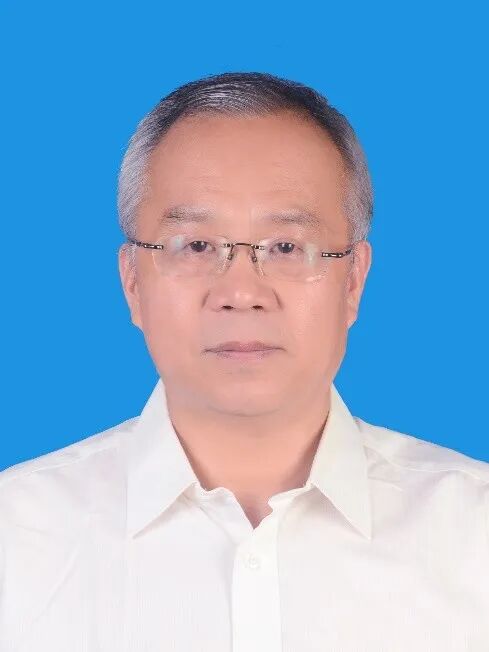
Liu Wenhong, male, Han ethnicity, born in September 1972 in Baishui County, Shaanxi Province, holds a postgraduate degree and a Ph.D. in Engineering, and is a senior engineer. He currently serves as a Senior Corporate Expert at the China Petroleum Engineering Materials Research Institute Co., Ltd. His primary work focuses on failure analysis of petroleum tubulars and equipment materials, research and technical support for well integrity in oil and gas wells, underground energy storage and carbon storage, as well as CO₂ sequestration and utilization studies. He has undertaken and completed more than 10 national and corporate research projects for the China National Petroleum Corporation. He has published over 50 academic papers and co-authored seven monographs, including Drilling Manual (Second Edition), Design Guidelines for Well Integrity in High-Temperature, High-Pressure, and High-Sulfur Environments, and Petroleum Tubular Engineering. He holds 15 national invention patents and has contributed to the development and revision of six national and industry standards, such as Integrity Management of Oil and Gas Well Tubulars, Recommended Practices for Coiled Tubing Operations in Oil and Gas Wells, and Nondestructive Testing Methods for Oil Well Tubulars – Part 2: Magnetic Flux Leakage Testing. He has received eight awards at the provincial/ministerial level or from industry associations. He is a senior member of the Chinese Materials Research Society, a member of the Society of Petroleum Engineers (SPE), a failure analysis expert of the Failure Analysis Branch of the Chinese Mechanical Engineering Society, and a think-tank expert of the Chinese Petroleum Society.
Research and application of digital ray detection technologies for nonmetallic pipeline
Hailiang Nie
Non-metallic pipelines have been widely applied in industries such as petroleum, chemical, fertilizer, pharmaceutical, metallurgy, building materials, textile, printing and dyeing, pesticides, rubber, and plastics. Compared to welded joints of metallic pipelines, the non-destructive testing (NDT) technologies for non-metallic pipelines, as specified in current standards, are still immature, incomplete, and inaccurate. In many regions, special equipment inspection authorities can only rely on visual inspection to examine the surface appearance of in-service non-metallic pipelines, a method far from sufficient to meet the requirements for quality control and hazard identification. From a technical principle standpoint, digital radiography can intuitively reveal defects in non-metallic pipelines through direct optical imaging. This paper reviews the historical application of digital radiographic testing technology and theoretically analyzes the parameter requirements and key technical challenges for its use in non-metallic pipeline inspection.
Considering the low-density characteristics of gas-grade polyethylene (PE) pipelines, experimental studies have determined several critical process parameters for the digital radiography system, including: image quality indicator, exposure configuration, tube voltage, exposure frequency, exposure time, resolution, and sensitivity. By fabricating 8 typical hot-melt joint defect reference pipes and 9 typical electrofusion joint defect reference pipes, digital radiography experiments were conducted to establish a digital radiographic atlas of typical defects.
This testing method has been incorporated into national standards and published as the “X-ray Digital Imaging Inspection Method for Welded Joints of Polyethylene Pipelines Used in Petrochemical Industry”, marking a significant step toward standardization and precision in non-metallic pipeline NDT.
Considering the low-density characteristics of gas-grade polyethylene (PE) pipelines, experimental studies have determined several critical process parameters for the digital radiography system, including: image quality indicator, exposure configuration, tube voltage, exposure frequency, exposure time, resolution, and sensitivity. By fabricating 8 typical hot-melt joint defect reference pipes and 9 typical electrofusion joint defect reference pipes, digital radiography experiments were conducted to establish a digital radiographic atlas of typical defects.
This testing method has been incorporated into national standards and published as the “X-ray Digital Imaging Inspection Method for Welded Joints of Polyethylene Pipelines Used in Petrochemical Industry”, marking a significant step toward standardization and precision in non-metallic pipeline NDT.
Biography of Hailiang Nie
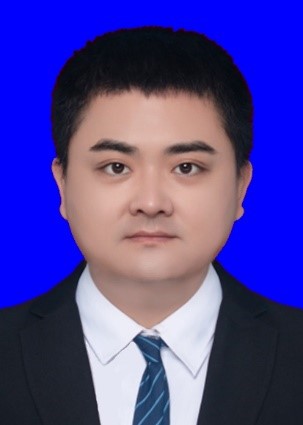
Nie Hailiang, Male, Han ethnicity, born in February 1988 in Heyang, Shaanxi Province. He holds a Ph.D. in Engineering and is a Senior Principal Engineer, as well as a Young Outstanding Talent of China Petroleum Engineering & Materials Research Institute Co., Ltd. His main research focuses on materials testing technology and structural integrity management. He has presided over 2 national-level projects and 8 provincial/ministerial-level projects, published 43 academic papers, obtained 26 authorized invention patents, and led the development or revision of 12 national/industry standards. He has won 2 awards at or above the provincial/ministerial level and industry association level, and has been honored with titles including Shaanxi Provincial Young Science and Technology Star, Xi'an Local Leading Talent, and CNPC Young Science and Technology Talent. He is a member of the China Association for Science and Technology (CAST) Youth Branch and a failure analysis expert of the Failure Analysis Branch of the Chinese Mechanical Engineering Society.