Conference Info
Invited Speaker of Parallel Session for Advanced Ultrasonic Testing Technology and Equipment at the 2026 FENDT Forum
Time:2026-06-06
Research and Application of Ultrasonic Testing Technology for Complex Curved Surfaces
Wenbin Zhou
Aiming at complex curved surface structures such as aero-engine blisks, the traditional ultrasonic testing scanning system has the prominent problem of poor accessibility. The change in surface curvature makes it difficult for the detection probe to maintain a constant incident angle and coupling distance, and it is unable to reach specific points to obtain the full picture of defect distribution, resulting in the detection efficiency and accuracy failing to meet engineering requirements. To this end, this study has constructed a seven-axis linkage ultrasonic testing system specifically for complex curved surface structures, which is especially suitable for the internal defect detection of complex-shaped parts such as aero-engine blisks. The system is composed of a six-axis robotic arm, a positioner, an ultrasonic flaw detector and a laser profilometer, and transmits ultrasonic signals and motion commands through the upper computer bus. The positioner drives the workpiece to rotate, adjusting the curved surface to be inspected in the interference blind zone to the working range of the robotic arm; the six-axis robotic arm carries the probe to realize posture following of the local curved surface; the laser profilometer collects the surface point cloud of the workpiece to correct the pose deviation between the actual and theoretical models; the ultrasonic flaw detector is responsible for the emission of excitation pulses and the reception of echo signals during scanning. Combined with the real-time feedback of joint angles from the positioner and the robotic arm, the system adaptively plans the scanning path and generates trajectory commands based on the CAD model. Through the coordinated interpolation motion of the two, the ultrasonic immersion focused probe performs continuous grid scanning along the generatrix and circumferential direction of the curved surface, always maintaining the optimal normal posture and constant coupling water distance, and finally realizes high-resolution C-scan imaging of internal defects in complex curved surfaces, effectively solving the pain points of the traditional testing system.
Biography of Wenbin Zhou
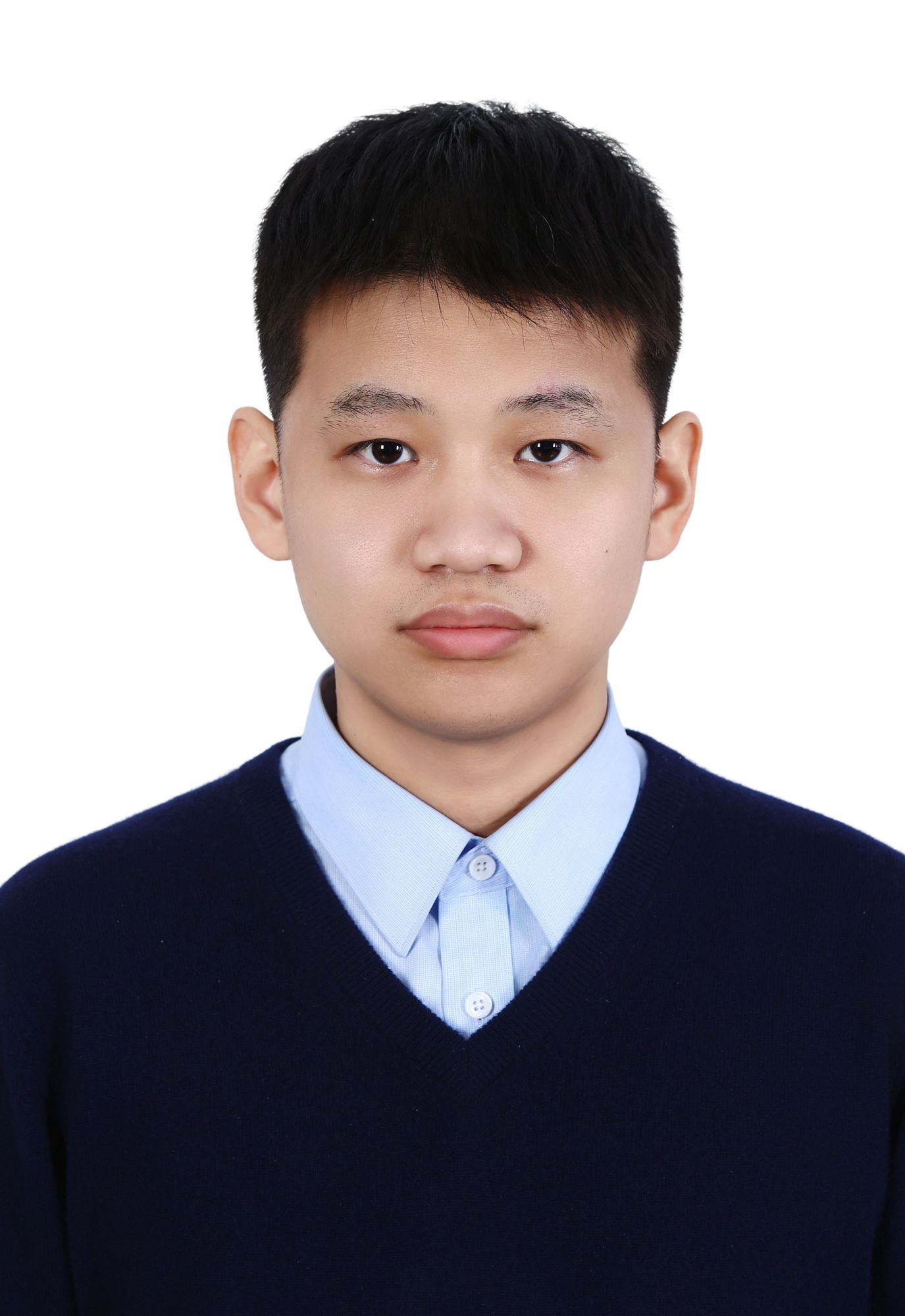
Zhou Wenbin, PhD, Associate Professor and Doctoral Supervisor at the School of Mechanical Engineering and Automation, Beihang University, and recipient of the National Young Talent Honor. His research focuses on ultrasonic non-destructive testing and evaluation, on-line monitoring and intelligent control of manufacturing processes, as well as high-performance forming and manufacturing technologies for lightweight thin-walled structures. In recent years, he has presided over and participated in numerous national and provincial-level research projects, including the Youth Program of the National Natural Science Foundation of China, the Special Project for Frontier Exploration of Engineering Science Empowered by Artificial Intelligence, National Major Science and Technology Projects, and key aerospace research programs. He has published more than 20 papers in top-tier Q1 SCI journals in the fields of non-destructive testing and aerospace engineering, such as NDT & E International, Measurement, International Journal of Machine Tools & Manufacture, International Journal of Mechanical Sciences and Aerospace Science and Technology. He currently serves as a member of the Youth Committee for Testing and Inspection Technology under China Aerospace Power Federation, and a member of the 2nd Youth Editorial Board of Journal of Plasticity Engineering.
Key Technologies of a Modern Ultrasonic Testing System with Design-Simulation-Control-Imaging Full-Chain Synergy
Yang Li
Driven by the increasingly demanding ultrasonic NDT&E requirements in aerospace, nuclear power, and related fields, a systematic study on key technologies of a modern ultrasonic testing system is presented, centered on the "Design-Simulation-Control-Imaging" full-chain synergy paradigm. At the design level, a 3D software platform with CAD/CAM capabilities is established, supporting parametric design of inspection schemes—including probe selection, wedge configuration, and beam focusing laws—as well as interactive C-scan contour-following trajectory planning. At the simulation level, a multi-dimensional 3D visualization and verification toolchain is developed. On the acoustic simulation side, it covers beam propagation path modeling, steady-state and transient acoustic field computation, and defect response prediction. On the motion simulation side, it provides reachability analysis, singularity identification, and interference detection for multi-axis scanning, enabling comprehensive feasibility assessment prior to execution. At the control level, a universal ultrasonic control and real-time data acquisition software framework adaptable to diverse ultrasonic modules is constructed, together with a universal C-scan real-time motion control system compatible with arbitrary numbers of axes and kinematic configurations. High-speed, high-precision synchronization between ultrasonic excitation/acquisition and multi-axis coordinated interpolation motion is achieved. At the imaging level, a GPU-free real-time ultrasonic imaging software is developed, independent of dedicated parallel architectures such as NVIDIA GPUs. It delivers multi-modal adaptive total focusing method (TFM) imaging, C-scan 3D real-time visualization, and 3D volume rendering, providing full-dimensional visual insight into inspection data. This full-chain synergistic platform has been validated through practical inspections of various complex structural components, achieving an end-to-end technical loop from inspection design to visualized imaging.
Biography of Yang Li
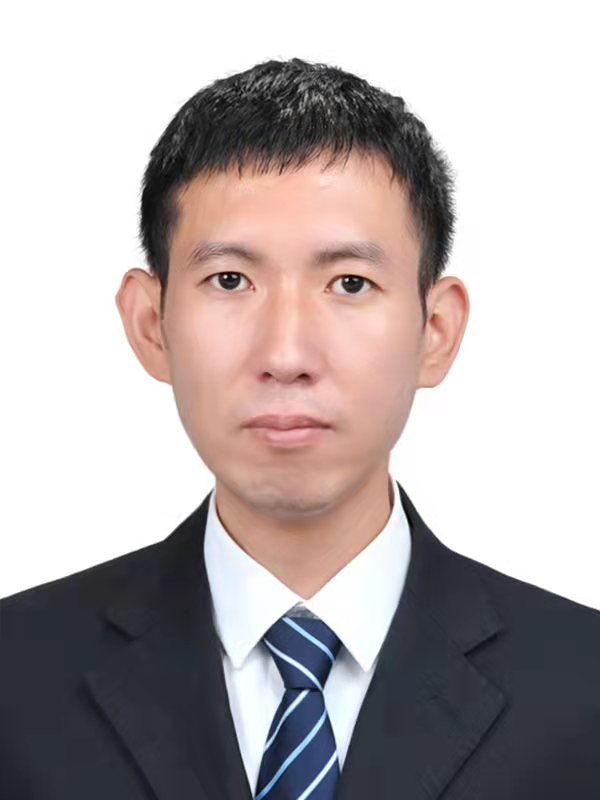
Li Yang, Associate Research Fellow at Ningbo Institute of Technology, Beihang University. He earned his Doctor of Engineering degree from Beihang University and is recognized as a Senior-Level Talent in Ningbo City. He has long been engaged in research on ultrasonic non-destructive testing and evaluation technologies, including process simulation of ultrasonic non-destructive testing, path planning and motion control for ultrasonic C-scanning, real-time array ultrasonic imaging, and the development of automatic ultrasonic non-destructive testing systems. He presides over 1 COMAC Innovation Fund project and participates in 3 National Natural Science Foundation of China projects. He has published 8 SCI papers and obtained 2 invention patents.