Conference Info
Invited Speaker of the Higher Education Section on Parallel Session for Jiangxi at the 2026 FENDT Forum
Time:2026-06-06
Some understanding points on the University students's cultivation for Measurement and Control Major
Zongwei Xu
This talk will introduce the relevant work and experiences of University students' cultivation in the Measurement and Control major in Tianjin University, focusing on aspects such as achieving the Educational Objectives, designing reasonable questionnaires, updating practical teaching platforms, and cultivating non-technical factors.
Biography of Zongwei Xu
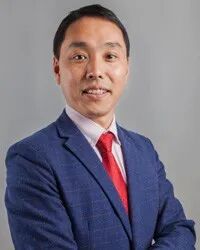
Prof. Xu Zongwei is a doctoral supervisor and the Chair of the Department of Precision Instrument Engineering at Tianjin University. He also serves as Vice Chair of the National University Interchangeability and Technical Measurement Research Society and a member of the Focused Ion Beam Committee of the Chinese Society for Electron Microscopy. His research focuses on wide-bandgap semiconductors, ultrafast energy beam processing, and Raman/photoluminescence spectroscopy. He has received five or more teaching and research awards at the provincial and ministerial level and has supervised over 50 master’s and doctoral students. As the principal investigator, he has secured more than ten national-level projects, including the National Key R&D Program and international collaboration projects, one of which was included in the Newton Fund of the Royal Society. Professor Xu has chaired five international and domestic academic conferences.
Learning through Practice and Innovating through Research: Cultivation of High-Quality Innovative Talents in Measurement and Control Technology
Jun Tu
Facing the demands of engineering education reform in the new era and the cultivation of high-quality innovative talents, the Measurement and Control Technology and Instrumentation program adopts the educational philosophy of “learning through practice and innovating through research.” Guided by the principles of student-centered education, outcome orientation, and continuous improvement, and based on the interdisciplinary characteristics of measurement and control involving optics, mechanics, electronics, computing, and management, the program has established a comprehensive ability cultivation system that integrates in-class teaching, practical teaching, second-classroom activities, and innovation teams. Through optimizing the curriculum system, strengthening progressive practical training, and promoting project-based teaching and team-based cultivation, the program integrates patriotism, scientific spirit, engineering ethics, and innovation awareness throughout the entire talent cultivation process. Relying on short-term semester training, discipline competitions, research projects, and comprehensive design tasks, it has formed a progressive cultivation pathway from basic abilities to professional abilities and then to comprehensive abilities. This pathway guides students to complete integrated engineering training in real engineering contexts, including structural design, sensing and measurement, motion control, data processing, and system integration. By establishing an evaluation and feedback mechanism that combines cultivation objectives, graduation requirements, course objectives, and teaching process monitoring, the program continuously improves course content, teaching methods, and practical training activities. As a result, students' hands-on practical ability, innovative design ability, teamwork ability, and ability to solve complex engineering problems have been effectively enhanced, providing valuable exploration for the cultivation of high-quality innovative talents in instrumentation-related programs.
Biography of Jun Tu
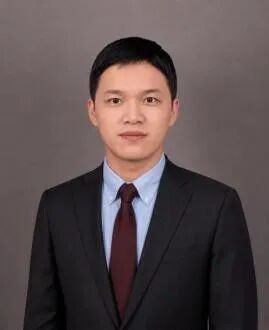
Prof. Tu Jun is a doctoral supervisor and the Head of the Department of Instrument Science and Quality Engineering at Hubei University of Technology. He holds the title of "Nanhu Scholar" at Hubei University of Technology and serves as the Director of the Hubei Engineering Technology Research Center for Nondestructive Testing. He is also a member of the Nondestructive Testing Branch of the Chinese Mechanical Engineering Society and a council member of the Hubei Nondestructive Testing Society. His research primarily focuses on the principles of electromagnetic-acoustic sensing for nondestructive testing, imaging methods, and engineering applications. He has led over 10 projects, including those funded by the National Natural Science Foundation of China and the Hubei Key Research and Development Program. He has published more than 50 academic papers and holds over 10 authorized invention patents. His achievements have been recognized with two First Prizes for Technological Invention in Hubei Province and one First Prize for Teaching Achievements in Hubei Province.
Reform and Practice of Practical Training Mode for Instrumentation Majors Oriented to Aerospace Power Construction
Yongkai Zhu
Relying on the national first-class major construction site and Jiangsu Provincial Brand Major of Measurement and Control Technology and Instrument at Nanjing University of Aeronautics and Astronautics, guided by national policies, this paper carries out the reform and practice of practical teaching mode by optimizing the practical teaching system, building a team of practical teaching teachers with combat-oriented capabilities, and constructing an ideological and political education model for instrumentation majors oriented toward building a powerful aerospace nation.
Biography of Yongkai Zhu
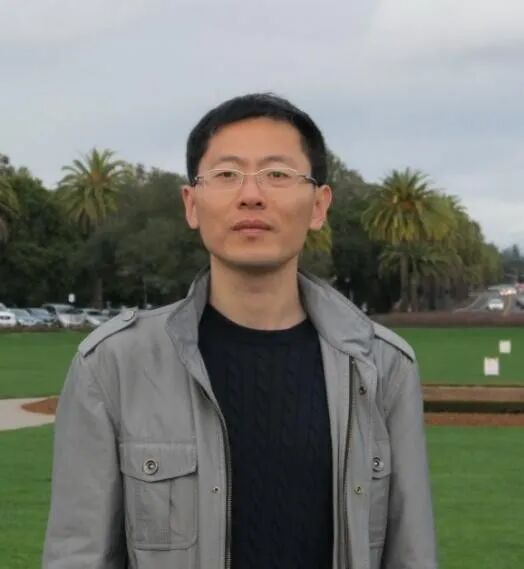
Dr. Zhu Yongkai is an Associate Professor at Nanjing University of Aeronautics and Astronautics, where he serves as the Assistant Dean of the College of Automation and the Chair of the Department of Measurement and Testing Engineering. He holds multiple academic and professional roles, including Deputy Director of the Nondestructive Testing Instruments Committee of the Jiangsu Instrument and Control Society, Council Member of the Jiangsu Instrument and Control Society, Senior Member of the Chinese Society of Astronautics, Senior Member of the China Instrument and Control Society, and Visiting Scholar at Stanford University. His long-term research focuses on structural health monitoring technologies and optical fiber sensing technologies for aerospace vehicles and special equipment.
Exploration on the Training Mode of Innovative and Applied Talents in the Field of Non-Destructive Testing for New Engineering Measurement and Control Majors Based on Four-Dimensional Collaboration and Digital-Intelligent Empowerment
Luyao He
In response to the requirements of new engineering construction and the digital and intelligent transformation of the non-destructive testing industry, aiming at the prominent problems in the current talent training of measurement and control majors, including insufficient integration of digital and intelligent technologies, inadequate industry-education collaboration, weak cultivation of innovative capabilities, and single-dimensional training framework, this paper proposes an innovative and applied talent training model featuring four-dimensional collaboration of value cultivation, ability training, innovation stimulation and ecological construction, as well as digital-intelligent empowerment. Guided by the competency requirements of digital and intelligent posts in the non-destructive testing industry, the proposed model breaks the barriers of the traditional single teaching and training mode, and deeply integrates digital and intelligent technologies such as artificial intelligence, machine vision, digital detection, and intelligent recognition into the whole process of non-destructive testing talent cultivation. Through the linkage and complementary empowerment of the four-dimensional education modules, a progressive digital and intelligent curriculum system is reconstructed, and an intelligent non-destructive testing training platform is established. Students’ innovative and practical capabilities are further improved through discipline competitions and school-enterprise joint scientific research projects. A full-chain closed-loop talent training system featuring “five leaderships”, “four connections and one consistency”, “dual integration and three stages”, and “five-element mutual promotion” is constructed. This model effectively bridges the gap between traditional talent training and the industrial digital-intelligent upgrading. It realizes the integrated cultivation of students' basic professional skills in traditional non-destructive testing and innovative capabilities in modern digital-intelligent detection, which precisely meets the demand for innovative and applied non-destructive testing talents in high-end equipment, special equipment and other fields. It provides a novel practical path and reference paradigm for the characteristic, high-quality and digital-intelligent talent cultivation of measurement and control majors in local universities.
Biography of Luyao He

Dr. He Luyao is an Associate Professor and Doctoral Supervisor at Shenyang University of Technology. She has been selected for the Young Scientific and Technological Talent Cultivation Program of the China Instrument and Control Society, the First Batch of the Liaoning Young Scientific and Technological Talent Lifting Project, and the Shenyang Leading Talent Program. She currently holds multiple academic and professional appointments, including Council Member of the Electromagnetic Nondestructive Testing Branch of the Chinese Mechanical Engineering Society, Committee Member of the Petroleum Storage and Transportation Committee of the Chinese Petroleum Society, Committee Member of the Visual Big Data Committee of the China Society of Image and Graphics, and Youth Editorial Board Member of the English edition of the Journal of Instrumentation. Additionally, she serves as Deputy Director of the Liaoning Provincial Key Laboratory of Advanced Online Detection. Her current research focuses on advanced online detection and pipeline in-line inspection technologies. Dr. He has led numerous research and teaching projects, including those funded by the National Natural Science Foundation of China, the Ministry of Education Industry-Academia Collaborative Education Program, and the Liaoning Provincial Education Reform Project. She has published over 30 academic papers and holds more than 30 authorized invention patents. Her contributions have been recognized with awards such as the First Prize of Liaoning Provincial Teaching Achievement Award and the First Prize of Science and Technology Progress Award of the China Instrument and Control Society.
Integration and Collaboration: The Changhang Practice in Cultivating Talents with Distinctive Skills in Non-destructive Testing
Bo Hu
General Secretary Xi Jinping emphasized the need to cultivate a large number of outstanding engineers and build a team dedicated to serving the Party and the nation, characterized by professional commitment, exceptional technological innovation capabilities, and proficiency in solving complex engineering problems. For critical national infrastructure, non-destructive testing serves as a vital safeguard. Supporting the national aviation strategy and nurturing exceptional engineering talents in non-destructive testing constitute the mission entrusted to Nanchang Hangkong University by our times. The cultivation of such talents faces prominent challenges, including incomplete reforms in engineering education and a disconnect between industry, academia, and research. To address these issues, Nanchang Hangkong University has implemented reforms and practices driven by deep integration of industry (demand-driven), research (project transformation), and education (talent development), alongside multidimensional collaboration across professional expertise, team projects, and value-based knowledge competencies. These efforts have yielded significant achievements, including the approval of four National First-Class Courses, recognition as a National Huang Danian-style Teaching Team, designation as a National Advanced Primary-Level Party Organization, and substantial improvements in student capabilities and employment outcomes.
Biography of Bo Hu
.png)
Prof. Hu Bo is a doctoral supervisor and the Head of the Department of Measurement and Control Technology and Instrumentation at Nanchang Hangkong University. She also serves as the Deputy Director of the Key Laboratory of Nondestructive Testing Technology, Ministry of Education. Prof. Hu has long been dedicated to theoretical and engineering application research in electromagnetic nondestructive testing technologies and instrument development. She has been successively recognized as a Young Academic and Technical Leader in Jiangxi Province's Key Disciplines and a Leading Talent. She has led three projects funded by the National Natural Science Foundation of China, five provincial/ministerial-level projects such as the Jiangxi Provincial Key R&D Program, and more than ten industry-sponsored horizontal projects. As the first or corresponding author, she has published over 30 SCI/EI-indexed papers in high-level journals including NDT & E International and Measurement. Her research findings have been compiled into two academic monographs published by Science Press, and she holds more than 10 authorized invention patents. Prof. Hu has also received the First Prize for Teaching Achievements from the China Instrument and Control Society (first-ranked contributor).