Conference Info
Invited Speaker of the Professional Society Section on Parallel Session for Jiangxi at the 2026 FENDT Forum
Time:2026-06-06
Adhering to Cooperative Construction and Promoting Integrated Industry-Education-Research Development
Lugen Zhang
Jiangxi Special Equipment Inspection and Testing Institute and Nanchang Hangkong University have closely focused on the field of Non-Destructive Testing (NDT), adhering to cooperative construction and promoting deep integration of industry, academia, and research. The two parties have carried out comprehensive cooperation in personnel training, engineering inspection, scientific research breakthroughs, platform construction, and postgraduate education, achieving remarkable results. In terms of personnel training, they jointly conduct NDT professional training to enhance the skill levels of industry talents. In engineering inspection, they collaboratively undertake practical testing tasks, promoting the engineering application of technological achievements. They have jointly applied for and implemented multiple scientific research projects, focusing on cutting-edge NDT technologies to align technological innovation with industrial needs. Together, they have established the Jiangxi Provincial NDT Engineering Center and other research platforms, creating an innovation base that integrates technology R&D, experimental verification, and outcome transformation. Additionally, relying on the Postgraduate Education Innovation Platform, they have explored a "university-institute" collaborative education model to improve the quality of high-level applied talent cultivation. Through institutional and mechanism innovation and resource integration, the Special Equipment Inspection Institute of Jiangxi Inspection, Testing and Certification General Institute and Nanchang Hangkong University have formed a cooperative pattern characterized by complementary advantages and mutual promotion. This has effectively enhanced technological innovation capabilities and service levels in the NDT field, providing strong support for high-quality industry development. This cooperation model offers a replicable practical experience for deepening industry-education-research integration and serving regional economic and industrial upgrading.
Biography of Lugen Zhang
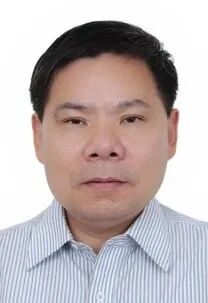
Zhang Lugen, a professor-level senior engineer at the Special Equipment Inspection and Testing Institute of the Jiangxi Provincial General Institute of Inspection, Testing, and Certification, is an expert recipient of the Provincial Government Special Allowance and is recognized as a Leading Talent in the Jiangxi New Century Hundred-Thousand-Ten Thousand Talent Project. He holds certifications as a Senior Inspector of Special Equipment, a Senior Practitioner in nondestructive testing methods (RT, UT, MT, and PT), and serves as Vice Chair of the Magnetic Particle and Penetrant Testing Committee of the Chinese Society for Nondestructive Testing, as well as Group Leader of the PT Specialized Group under the Testing Technology Application and Evaluation Committee of the China Special Equipment Inspection Association. He is also a Chief Auditor for national special equipment manufacturing, installation, and inspection bodies, a technical assessor for CNAS-accredited laboratories and inspection bodies under the China National Accreditation Service for Conformity Assessment, and a Chief Assessor for national and provincial CMA certification.
Research and Application of Structured Light Measurement Technology Based on Polarization Imaging
Zhenmin Zhu
In recent years, the research team has focused on key core technologies, including polarized vision imaging, polarized structured light encoding, system calibration, and measurement. In the field of measurement imaging, the team has developed an integrated technical approach that combines "polarization + structured light," establishing a complete pipeline from physical modeling, system implementation, to engineering applications. The research emphasizes high-robustness 3D acquisition and intelligent perception in complex environments, and the results have been widely applied in industries such as electronics and information technology, rail transportation, road traffic, and the State Grid Corporation of China.
Biography of Zhenmin Zhu
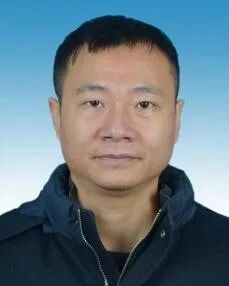
Prof. Zhu Zhenmin is a doctoral supervisor and the Vice Dean of the School of Electrical and Automation Engineering at East China Jiaotong University. He serves as the academic discipline leader for the doctoral program in Control Science and Engineering. Professor Zhu is a recipient of the Jiangxi Provincial Government Special Allowance and has been selected for the Ganpo Talent Program—Youth Innovation High-Level Talent, the Jiangxi Outstanding Young Talent Support Program, and the Young Jinggang Scholar Program. He has led or completed over 30 national, provincial, and industry-sponsored projects, including the National Natural Science Foundation of China, the Jiangxi Key R&D Program (Challenge Listing Project), the Jiangxi Outstanding Young Talent Program, the Provincial Key Patent Industrialization Project, and the Provincial Natural Science Foundation. His current research focuses on precision visual measurement, intelligent inspection and automation systems, and polarized vision imaging. His work on "Key Technologies and Applications for Enhancing Visual Imaging Contrast" received the Second Prize of the Jiangxi Technology Invention Award in 2020 (first-ranked contributor), and the project "Key Technologies and Engineering Applications of Non-Contact Inspection and Measurement for Rail Transit Infrastructure" was awarded the Second Prize of the Jiangxi Science and Technology Progress Award in 2023 (first-ranked contributor).
The application of non-destructive testing technology in Jiangxi power grid in recent years
Hui Zhu
In recent years, nondestructive testing technologies have played an active role in the entry inspection of materials for the Jiangxi power grid, the inspection of GIS shells and internal components, welded parts of condensers, post insulators, basin-type insulators, and defect detection in insulating components. This report presents the application of nondestructive testing technologies in the Jiangxi power grid, including relevant cases.
Biography of Hui Zhu
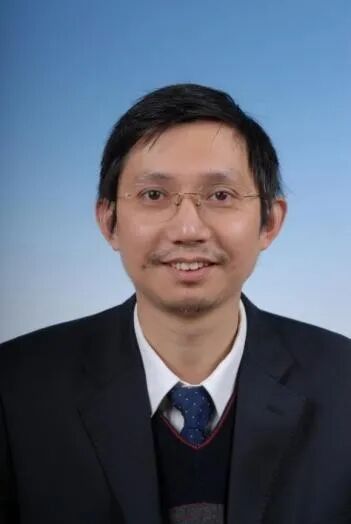
Zhu Hui, a professor-level senior engineer at the Electric Power Research Institute of State Grid Jiangxi Electric Power Co., Ltd., serves as a member of the Metallic Materials Committee of the Chinese Society for Electrical Engineering. He has long been engaged in the inspection and testing of power plant boilers, pressure vessels, and nondestructive testing for the power grid. He has led or participated in projects such as the development of a high-voltage transmission line damage detection system and research on preventive measures for unplanned unit shutdowns caused by oxide scale blockages in ultra-supercritical and supercritical units.
Development of Automatic and Intelligent Ultrasonic Testing System for Aircraft Sandwich Honeycomb Composite Structure
Zhenhua Chen
The honeycomb composite structure of aircraft horizontal tail is large in size, complex in material structure and high in quality requirements.Water-jet ultrasonic focusing imaging detection technology can realize the imaging detection of honeycomb structure. However, the evaluation of a large number of detection images depends on the rich engineering experience and high-intensity work of technicians, which inevitably leads to poor evaluation reliability due to the influence of subjective factors. Therefore, an automatic ultrasonic testing system for aircraft horizontal tail based on mechanical arm, and an intelligent recognition technology for ultrasonic C-scan inspection image of honeycomb composite material of aircraft horizontal tail based on deep learning network are proposed. Firstly, a water-jet automatic ultrasonic focusing inspection method based on a mechanical arm is developed, and a C-scan inspection image of an aircraft horizontal tail is efficiently acquired. Secondly, an ultrasonic inspection image data set of the aircraft horizontal tail is constructed and expanded, and the inspection image is divided into three target area categories according to the bonding integrity degree based on the amplitude distribution of an inspection signal corresponding to the inspection image. Thirdly, a deep learning network is constructed and optimized to form an intelligent recognition network for the tiny feature changes in the ultrasonic C-scan area of the honeycomb composite structure. Finally, the performance of the intelligent recognition model is tested by a test method to verify the ability of the intelligent recognition model to evaluate the ultrasonic C-scan image of the honeycomb structure. The results indicate that the developed automatic detection system can efficiently extract the information of honeycomb composite structures, the average accuracy of the intelligent model based on deep learning for the classification and recognition of honeycomb composite materials is 88. 2%, and the average accuracy of the identification of the worst bonding state area (three types of areas) is 91. 9%, which can be use for classifying ultrasonic C-scan detection images of the honeycomb composite material structure.
Biography of Zhenhua Chen
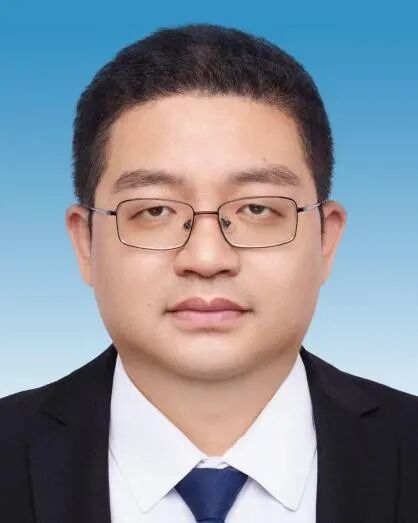
Prof. Chen Zhenhua holds a Ph.D. and is the Vice Dean of the School of Instrument Science and Opto-Electronics Engineering at Nanchang Hangkong University. He serves as Vice Chair of the Education and Popularization Conference of the Nondestructive Testing Branch of the Chinese Mechanical Engineering Society, Secretary-General/Executive Council Member of the Jiangxi Society for Nondestructive Testing, and Committee Member of the Jiangsu Provincial Standardization Technical Committee for Nondestructive Testing. In recent years, he has led three National Natural Science Foundation projects, four provincial/ministerial-level projects, and over twenty industry-sponsored technology development initiatives. He has published more than 60 papers in domestic and international academic journals, holds 15 authorized invention patents, and received a Jiangxi Science and Technology Progress Award in 2020. His research primarily focuses on the development of automated and intelligent ultrasonic nondestructive testing technologies and systems.
Research on an Electromagnetic Acoustic Signal Quality Enhancement Method Based on Decomposition–Reconstruction and Spatiotemporal Pulse
Zhichao Cai
For the electromagnetic acoustic Rayleigh-wave receiving signal, delayed superposition of responses from different conductor segments can disperse the main wave packet and enhance sidelobes. To address this problem, a signal quality enhancement method based on decomposition–reconstruction and spatiotemporal pulse compression is proposed. A CNN-BiLSTM model is used to decompose the overall received signal into local responses of vertical conductor segments. A polarity reconstruction constraint is introduced according to the coil winding direction to ensure physical consistency. Then, delay compensation and polarity correction are performed to align and coherently superimpose the main wave packets, thereby improving energy concentration and waveform distinguishability. To address the deviation between the measurement center of spatiotemporal pulse compression and the geometric center of the transducer, the proposed method further estimates the equivalent receiving center using the decomposed signals and conductor segment positions, enabling center-offset correction. Simulations on PWM and WNM meander coils show that the decomposition correlation coefficients reach 0.965 and 0.980, respectively, and the reconstruction correlation coefficients exceed 0.999. After alignment, the PSLR values increase from 4.38 dB and 2.26 dB to 15.54 dB and 15.85 dB, respectively, while the MSER values also increase significantly. These results indicate that the proposed method enhances coherent aggregation of the main wave packet and corrects measurement-center offset, showing potential for high-precision electromagnetic acoustic testing.
Biography of Zhichao Cai
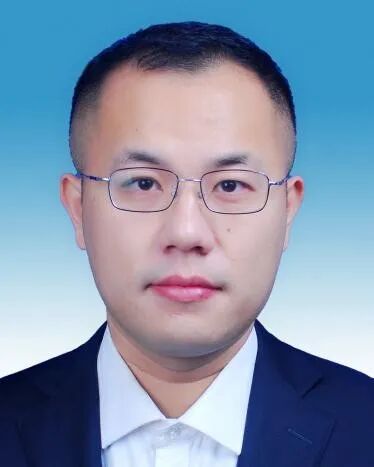
Dr. Cai Zhichao is the Deputy Director of the Personnel Department and an Associate Professor in the School of Electrical and Automation Engineering at East China Jiaotong University. He holds a Ph.D. in Engineering and is a Master’s Supervisor, recognized as a Leading Academic and Technical Talent in Key Disciplines of Jiangxi Province. His primary research focuses on electromagnetic nondestructive testing and the prevention of stray currents in metro systems. In recent years, he has led two National Natural Science Foundation projects and five provincial/ministerial-level projects, including the Jiangxi Key R&D Program. One of his research achievements has been included in the National Railway Major Science and Technology Innovation Database. He has published over 40 SCI/EI-indexed papers as the first or corresponding author and holds 10 authorized invention patents. He serves as a member of the Electromagnetic Testing Committee of the Chinese Electrotechnical Society and has been honored with titles such as National Railway Young Expert and Jiangxi New Era Ganpo Pioneer. Additionally, he acts as a review expert for railway specialized equipment under the National Railway Administration and for the National Natural Science Foundation, as well as a reviewer for several domestic and international authoritative journals.
Research Progress on Infrared Thermography Nondestructive Testing Technology for Ceramic Matrix Composites
Lihua Yuan
Typified by SiC/SiC and C/SiC composites, ceramic matrix composites (CMCs) possess excellent comprehensive properties such as high specific strength, superior high-temperature resistance, good thermal shock resistance and oxidation resistance. They serve as critical structural materials for hot-end components of aerospace engines, thermal protection systems of near-space vehicles and core parts of heavy-duty gas turbines. Internal inherent defects including pores, interlaminar delamination, interfacial debonding and matrix microcracks are prone to form during the fabrication of CMCs. Under the coupled service conditions of high-temperature thermal load, alternating mechanical load and oxidative ablation, secondary damages such as crack propagation, fiber-matrix debonding, environmental barrier coating (EBC) spallation and high-temperature oxidation will further occur, which directly threaten the service safety and shorten the service life of components. Featuring non-contact measurement, full-field rapid imaging, zero radiation hazard and dynamic monitoring capability, infrared thermography nondestructive testing has become one of the major techniques for defect identification, quantitative damage characterization and full-lifecycle condition evaluation of CMCs. This paper systematically elaborates the fundamental heat conduction mechanism of infrared thermography applied to CMCs inspection, and presents the technical characteristics and application scenarios of mainstream testing methods including pulsed thermography and lock-in thermography. Combined with the preliminary research of the research team and literature review, the applications of infrared thermography in high-temperature monitoring, porosity measurement, defect feature extraction and infrared sequence image processing are summarized. Finally, the future development trends of this technology are discussed.
Biography of Lihua Yuan
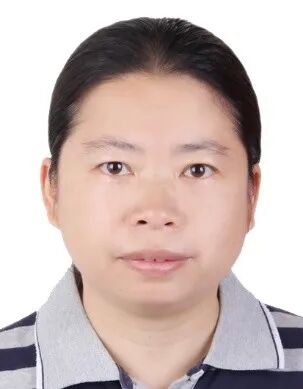
Prof. Yuan Lihua is a professor at Nanchang Hangkong University. She earned her Ph.D. in Instrument Science and Technology from Nanjing University of Aeronautics and Astronautics in 2009. Her current research primarily focuses on infrared thermographic testing technology. She has completed several research projects on infrared nondestructive testing, including those funded by the National Natural Science Foundation of China. She has authored two monographs and published over 80 academic papers, covering areas such as the principles of infrared thermographic testing, simulation modeling, defect feature extraction, infrared sequence image processing, small target detection in infrared images, and fusion of infrared and visible-light images.