Conference Info
Invited Speaker of the Alumni Section on Parallel Session for Jiangxi at the 2026 FENDT Forum
Time:2026-06-06
Stay true to our original aspiration and pursue a non-destructive approach. Inherit and innovate for sustainable development
Jilin Ren
This paper introduces the arduous establishment, perseverance through challenges, and innovative development of the Nondestructive Testing major in the Measurement and Control Technology and Instrumentation discipline at Nanchang Hangkong University. It summarizes key insights into university discipline construction, such as "consensus-building" as the ideological foundation for developing advantageous disciplines, the "persistence, resilience, and innovation" spirit of nondestructive testing as the driving force behind Nanchang Hangkong University's NDT professionals in overcoming difficulties, and the "society-oriented, collaborative development" model as an innovative approach to discipline advancement. The study suggests that the Nondestructive Testing major should continue innovating through the "shared resources" strategy and "leveraging strengths" approach, building on collective efforts to contribute to the university's growth and the nation's advancement in nondestructive testing technology.
Biography of Jilin Ren
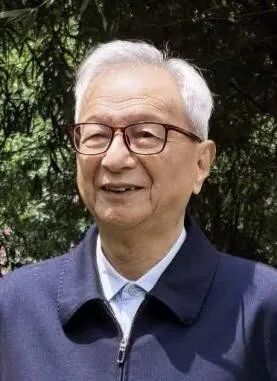
Ren Jilin, a second-level professor, is an expert recipient of the State Council Special Allowance and a renowned teaching expert in Jiangxi's higher education sector. He previously served as Vice Chairman of the Chinese Society for Nondestructive Testing (CSNDT) and Chairman of the Jiangxi Society for Nondestructive Testing. He has been honored with the CSNDT "Special Contribution Award" and "Lifetime Achievement Award," as well as the "Yangzhi Award" from the Far East Nondestructive Testing New Technology Forum. As one of the founders of the nondestructive testing discipline at Nanchang Hangkong University, he has dedicated 40 years to teaching and research in electromagnetic nondestructive testing technology. He has held various administrative roles, including Deputy Director of the Mechanical Engineering Department, Head of the Electronic Engineering Department, Head of the Measurement and Control Engineering Department, Director of the Jiangxi Measurement and Control Engineering Research Center, and Deputy Director of the Key Laboratory of Nondestructive Testing under the Ministry of Education. He has led over 20 national, ministerial, and provincial teaching and research projects, receiving one First Prize for Teaching Achievements at the provincial level and seven Second and Third Prizes for scientific and technological achievements at the ministerial and provincial levels. He has authored six published monographs and textbooks and published over 100 academic papers in journals such as Acta Aeronautica et Astronautica Sinica and Chinese Journal of Scientific Instrument, with more than 20 of them indexed by SCI or EI.
The Multimodal Design in the Object-oriented Industrial Intelligent Detection and Evaluation System and its Application
Songping Liu
In recent years, the most dynamic development direction has been the strategic integration of artificial intelligence (AI), enabling intelligent data processing, adaptive system configuration, and seamless interoperability across heterogeneous NDT scenarios, inspection objects, and operational contexts. This integration enhances both technical performance—such as detection accuracy, resolution, and throughput—and human factors—including operator comfort, decision support, and workflow efficiency. However, due to the inherent diversity of application domains, inspection conditions, target materials, regulatory requirements, and available resources, no single NDT method or platform can universally address all operational challenges. As a result, manual or semi-automated approaches remain prevalent across many industrial settings—a reality that underscores the persistent gap between current practice and the full potential of intelligent NDT. The rapid maturation of AI technologies now presents a transformative opportunity: AI-powered NDT systems can elevate inspection from isolated defect identification and compliance verification toward integrated, lifecycle-aware health assessment. Specifically, modern intelligent NDT platforms—grounded in robust detection outputs—can autonomously generate visualized, interpretable, and quantifiable evaluations of structural integrity, degradation risk, or functional health status across the asset lifecycle. Such capabilities substantially expand NDT’s role within smart manufacturing, predictive maintenance, digital twin implementation, and real-time quality assurance frameworks. Accordingly, the development and deployment of industrially viable, intelligent detection, monitoring, and evaluation technologies have emerged as a strategic priority with tangible progress across leading research and industrial initiatives. This report first analyzes key technical bottlenecks hindering the industrial adoption of intelligent NDT solutions, drawing upon three decades of global technological evolution and the authors’ extensive R&D and field-deployment experience. It then outlines a coherent technical roadmap for industrial-grade intelligent NDT—emphasizing scalability, robustness, interpretability, and domain adaptability. Next, the report presents Mia Visual 4.0++, an object-oriented, industrial-level intelligent NDT platform developed by the authors’ team, detailing its architectural philosophy, modular design, and core functional layers. Subsequently, the multimodal intelligent detection and evaluation framework—the central innovation of Mia Visual 4.0++—is rigorously analyzed through representative use cases spanning diverse inspection scenarios. Results demonstrate substantial cross-modal synergies, yielding simultaneous improvements in precision, spatial/temporal resolution, inspection speed, and operational ergonomics.
Biography of Songping Liu
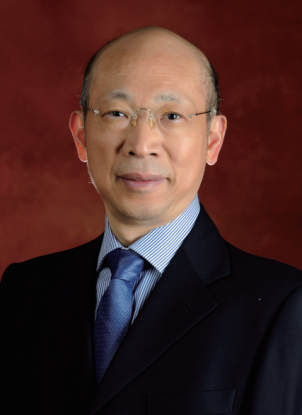
Liu Songping is a research fellow at the AVIC Composite Technology Center/AVIC Manufacturing Technology Institute. He holds a Ph.D. in Science from Lomonosov Moscow State University, Russia, and is recognized as a Special‑Grade Expert of AVIC and Vice Chairman of the Nondestructive Testing Branch of the Chinese Mechanical Engineering Society. For over 30 years, he has been dedicated to innovative R&D and engineering applications of nondestructive testing and evaluation technologies for composite materials and welded structures. His independent research spans a range of areas, including ultrasonic and radiographic 2D, 2.5D, and 3D high‑efficiency automated scanning and imaging techniques, as well as associated inspection equipment, transducers, signal processing, intelligent testing and evaluation, inspection standards, and practical applications. He is the creator of the object‑oriented industrial‑grade intelligent inspection and evaluation system (Mia Visual 4.0++). Dr. Liu has led or contributed to more than 100 key projects funded by government and industry, as well as international scientific cooperation programs. His work has earned him 24 provincial/ministerial‑level awards for technological invention and science and technology progress (first, second, and third prizes). He has published over 160 papers, authored the monograph "Advanced Nondestructive Testing Technology for Composite Materials," obtained more than 100 national invention patents, and participated in drafting over 100 national and enterprise‑level inspection standards. He is a leading international proponent of NDE4.0 and intelligent nondestructive testing and evaluation (iNDT&E), and serves as the Conference Chair of the iNDT&E Congress organized by the Nondestructive Testing Branch of the Chinese Mechanical Engineering Society.
Development Demands and Prospect of Nondestructive Testing Equipment for Aero-Engines
Fangcheng He
This report introduces the main materials and components used in aero-engines, as well as the major application scenarios of corresponding nondestructive testing equipment. It analyzes the challenges and cutting-edge technologies faced by aero-engine nondestructive testing equipment, and forecasts its future application prospects in combination with practical applications.
Biography of Fangcheng He
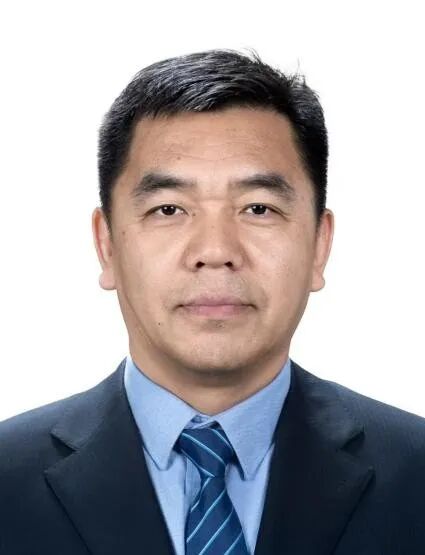
He Fangcheng is a research fellow and currently serves as a Senior Project Manager at the AECC Beijing Institute of Aeronautical Materials. He is also a council member of the Nondestructive Testing Branch of the Chinese Mechanical Engineering Society, the Director of the Nondestructive Testing Personnel Qualification Certification Committee of AVIC/AECC, and the Director of the Nondestructive Testing Professional Committee of the AECC Testing Institution Certification Center. Additionally, he is a member of the National Nondestructive Testing Standardization Technical Committee. With over 30 years of experience, he has been engaged in research and management of nondestructive testing technologies for metallic, non-metallic, and composite materials and components used in aircraft and aero-engines. He has led multiple research projects funded by defense technology foundations, civil aircraft pre-research programs, and key model development initiatives, focusing on nondestructive testing standards formulation, equipment development, and reference material production. He has published more than 30 papers, led or contributed to the drafting of over 20 standards, holds more than 20 patents, and has received over ten scientific and technological awards at the national defense and corporate levels.
Application and Development Prospects of Advanced Non-Destructive Testing Technologies in Nuclear Engineering Construction
Yu Yan
Non-destructive testing (NDT) during the construction and installation phase of nuclear power plants is a critical process for ensuring the integrity of nuclear safetipment. With the requirements for high-quality, large-scale construction of a new round of nuclear power projects, the limitations of traditional radiographic film testing and conventional ultrasonic testing have become increasinglminent. This paper systematically reviews the development status of advanced NDT technologies, including phased array ultrasonic testing, time-of-flight diffraction, digital radiography, alternating current field measurement, ad inspection equipment, both domestically and internationally. Combined with the iteration of relevant nuclear industry standards, the application progress of these technologies in typical nuclear construction scenarios—such as mai pipe welds, thick-walled carbon steel pipe welds, and thin-walled pipe welds—is analyzed. On this basis, innovative practices and engineering verification results in areas such as mainphased array ultrasonic testing, cold cathode digital radiography, alternating current field measurement, and digital platform construction are introduced. Finally, from the perspectives of intelligent assisted evaluation, online weldingctromagnetic surface testing, inspection robots, and cloud-based testing, the development path of NDT technology in nuclear facility construction toward automation, digitalization, and intelligence is outlined, providil references for quality assurance under the "three-step" strategy of nuclear energy development.
Biography of Yu Yan
Yan Yu is the Deputy Director of the Quality Management Department at China Nuclear Industry 23 Construction Co., Ltd. (CNI23), holding the title of Research Professor‑Level Senior Engineer. He has been appointed as a Special‑Invited Expert of the National Nuclear Safety Expert Committee, Senior Technical Expert of China Nuclear Engineering & Construction Group Co., Ltd. and CNI23, and a Master’s Supervisor at Beijing University of Technology and Nanchang Hangkong University. He also serves as a Senior Assessor for Nondestructive Testing Personnel of Civil Nuclear Safety Equipment, a Member of the Working Committee of Nondestructive Testing Institutions of China Special Equipment Inspection Association, a Member of the Pressure Piping Working Committee of the same association, and a Member of the Testing Technology Application and Evaluation Working Committee. Additionally, he holds the position of Vice Chair of the Radiographic Testing Conference of the Nondestructive Testing Branch of the Chinese Mechanical Engineering Society, Deputy Director of the Nondestructive Testing Branch of the Beijing Mechanical Engineering Society, Secretary‑General of the Beijing Association of Special Equipment Nondestructive Testing Institutions, and Vice Chair of the Beijing Special Equipment Association.
Performance testing and evaluation of ultrasonic instruments and its quality classification
Qianghua Pan
This report presents a systematic investigation on the performance testing, evaluation, and quality grading of ultrasonic instruments. In accordance with relevant standards such as ASTM, EN/ISO, and Chinese GB/T, JB/T, and JJG specifications, the study focuses on conventional ultrasonic flaw detectors, TOFD (Time of Flight Diffraction) instruments, and phased array ultrasonic systems along with their associated probes. A comprehensive testing and evaluation framework has been established, covering key performance aspects including transmission characteristics, reception capabilities, stability, probe properties, combined performance, and operational usability.
Biography of Qianghua Pan
Dr. Pan Qianghua is a senior engineer and serves as the Director of the Testing and Evaluation Division at the China Special Equipment Inspection and Testing Institute, as well as the Director of the Office of the National Nondestructive Testing (NDT) Quality Inspection Center. His work primarily focuses on the inspection, testing, evaluation, and performance assessment of NDT technologies and products, as well as the appraisal of technological achievements and research in standards and standardization. In addition, he holds multiple professional roles, including Chair of the Instrumentation Group of the Working Committee of the China Special Equipment Inspection Association, Assessor of the China National Accreditation Service for Conformity Assessment, Technical Expert for the Beijing Municipal Administration for Market Regulation, Registered Expert of ISO/TC135/SC11, External Doctoral Supervisor at Donghua University, Master’s Supervisor at Nanchang Hangkong University, and Editorial Board Member of the journal Advanced Manufacturing Engineering. Over the years, he has been responsible for or participated in three National Key R&D Programs, four scientific projects under the State Administration for Market Regulation, and several provincial/ministerial-level research initiatives. He has led the drafting of two national standards and four industry standards related to NDT technologies under the National Energy Administration. As the first contributor, Dr. Pan has received one provincial/ministerial-level third prize, two second prizes for scientific and technological awards from industry associations, and has published over 10 papers in SCI/EI-indexed or Chinese core journals, along with eight invention patents/software copyrights.
Intelligent Eddy Current Testing Technology and Its Applications
Kai Song
To address the problems of shallow eddy current penetration depth and low detection efficiency in eddy current testing of complex components, our research group has mainly studied planar far-field eddy current testing technology and automated eddy current testing technology. The research is primarily applied to the detection and identification of deep hidden defects in multi-layer riveted aircraft structures and efficient inspection of complex aerospace components. We have established simulation calculation models, developed eddy current probes and testing systems, and carried out practical detection applications.
Biography of Kai Song
.png)
Prof. Song Kai is a doctoral supervisor at Nanchang Hangkong University and has been selected for the Jiangxi Hundred, Thousand, and Ten Thousand Talents Project. He serves as the Vice Chair of the Electromagnetic (Eddy Current) Conference and the Vice Chair of the Intelligent Testing and Evaluation Conference of the Chinese Society for Nondestructive Testing, and is an editorial board member of the journal China Special Equipment Safety. His research primarily focuses on the innovation of electromagnetic nondestructive testing technologies and instruments. He has led over 50 research projects, including those funded by the National Natural Science Foundation of China, the National Major Scientific Instrument Development Project, civil aircraft special projects, and industry-sponsored initiatives (including one project with funding exceeding 10 million RMB). He developed China’s first robotic eddy current imaging inspection system for turbine blades and high‑speed railway bogies, and the eddy current probe manufacturing technology he pioneered has been included in the Restricted Export Catalog by the Ministry of Commerce. Professor Song has published more than 80 high‑quality papers, contributed to the formulation of over 10 national and industry standards, and received three provincial/ministerial‑level first prizes for scientific and technological achievements, as well as two Jiangxi Provincial Teaching Achievement Awards.
Advanced Ultrasonic Testing Technologies Drive the Upgrading and Development of Smart Manufacturing
Rui Zhang
With the in-depth advancement of the “Made in China 2025” strategy, intelligent manufacturing has become a core engine driving high-quality industrial development. As a key means of ensuring the quality, safety, and reliability of high-end equipment, nondestructive testing technology is undergoing a critical transformation from traditional manual interpretation toward digitalization and intelligence. This report focuses on advanced industrial ultrasonic nondestructive testing technologies and explores their core role and application prospects in supporting the upgrading of the intelligent manufacturing industry. The report first analyzes the current challenges facing industrial ultrasonic testing, including high precision, high efficiency, and adaptability to complex working conditions, and systematically introduces the development status of cutting-edge technologies such as Phased Array Ultrasonic Testing (PAUT) and the Total Focusing Method (TFM). It then focuses on the deep integration pathways of these advanced technologies with artificial intelligence (AI) and big data analytics. By developing deep-learning-based automatic defect recognition algorithms and intelligent evaluation models, real-time processing and accurate interpretation of testing data can be achieved, significantly improving the level of automation and consistency in testing. This effectively addresses key pain points of traditional methods, such as heavy reliance on expert experience and fluctuations in missed detection rates. In addition, through typical application cases in aerospace, rail transportation, new energy, and precision manufacturing, the report demonstrates the practical effectiveness of advanced ultrasonic testing technologies in enabling closed-loop quality control throughout the production process, predictive maintenance, and process optimization. The study shows that advanced industrial ultrasonic nondestructive testing technology is not only a powerful “sharp eye” for improving product quality, but also an important foundation for connecting the intelligent manufacturing data chain and driving industries toward high-end, green, and intelligent development. Finally, the report provides an outlook on future technology trends, aiming to offer theoretical support and practical reference for the technological upgrading and industrial planning of relevant enterprises.
Biography of Rui Zhang
Zhang Rui has long been dedicated to research in industrial and medical ultrasound technologies. In 2013, he founded Ainetic Technology (Shanghai) Co., Ltd., where he has led the development and commercialization of multiple ultrasound imaging devices and ultrasonic sensor products. He has contributed to the formulation of 23 national standards, published 4 scientific papers, and holds 1 international patent and 8 domestic invention patents. The research outcomes he has participated in have earned multiple prestigious science and technology awards. Additionally, he holds several professional and public service positions, including Council Member of the Chinese Society for Nondestructive Testing, Committee Member of the National Technical Committee for Nondestructive Testing Standardization, Committee Member of the Subcommittee on Weld Testing and Inspection of the National Technical Committee for Welding Standardization, Expert Member of the Shanghai Science and Technology Commission Expert Database, Guest Professor at Nanchang Hangkong University, and Off‑Campus Graduate Supervisor for both Huazhong University of Science and Technology and East China University of Science and Technology.